

Trump's Former Lawyer to Help with Reality Winner's Appeal
President Donald Trump's former lawyer, Michael Cohen, is attempting legal representation to aid former Air Force language analyst contractor and Kingsville native Reality Winner with her case.
By Menda Eulenfeld, South Texas Community News - October 8, 2020

By U.S government - https://medium.com/@amnestyusa/amnesty-international-usa-urges-president-trump-to-release-whistleblower-reality-winner-27c2a15827b4, Public Domain, https://commons.wikimedia.org/w/index.php?curid=90559043
Billie Winner-Davis, Reality Winner's mother, told Business Insider on Tuesday that President Donald Trump's former lawyer, Michael Cohen, is attempting legal representation to aid the former Air Force language analyst contractor and Kingsville native Reality Winner with her case.
Winner pleaded guilty in 2018 to leaking classified National Security Agency information on Russia's alleged efforts to interfere with the 2016 election. She was found guilty of violating the U.S. Espionage Act and sentenced to five years in prison at the Federal Medical Center-Carswell in Fort Worth, Texas.
In 2016 following her separation from six years of active duty, Winner was hired by Pluribus International Corporation under an NSA contract to work out of Fort Gordon, Georgia.
According to ABC News, Winner printed a classified report detailing how Russian hackers allegedly “executed cyber espionage operations” on local election systems and mailed the documents to The Intercept. She was arrested on June 3, 2017.
Michael Cohen, who pleaded guilty to campaign violations and tax fraud in 2018, began serving his sentence in May 2019 at the federal penitentiary in Otisville, New York. He has been under house arrest since July over coronavirus concerns.
Military.com stated that Reality’s mother sent a Twitter message that said “Cohen has asked another attorney to look at the case and for opportunities to help.”

Wi-Fi Buses
As more students return to school in person, some school districts are having to trim back programs that deployed buses as hot spots in neighborhoods for students with little or no internet access.

Wi-Fi buses were a quick solution for student internet access, but as schools reopen they need their buses back
"Wi-Fi buses were a quick solution for student internet access, but as schools reopen they need their buses back" was first published by The Texas Tribune, a nonprofit, nonpartisan media organization that informs Texans — and engages with them — about public policy, politics, government and statewide issues.
Need to stay updated on coronavirus news in Texas? Our evening roundup will help you stay on top of the day's latest updates. Sign up here.
The sight became familiar across Texas after the coronavirus pandemic abruptly closed schools last spring — empty school buses rigged with Wi-Fi routers sat in parking lots and neighborhoods, allowing students to tap into free internet to do their schoolwork.
But with more students returning to in-person classes, some school districts now need to get those buses back on the road while still figuring out how to provide internet access to families needing it.
The Austin Independent School District has been deploying 261 Wi-Fi-equipped buses across 40 neighborhoods with little or no home internet access, said Eduardo Villa, a district spokesperson. Drivers not needed to haul loads of students to school and away sports events stationed their buses as internet access points on weekdays from 7:30 a.m. to 4:30 p.m, said Kris Hafezizadeh, the district’s executive director of transportation.
Austin's schools reopened for in-person classes Monday. While bus drivers will still have Wi-Fi duty, the hours will be squeezed between morning and afternoon routes — roughly 4-hour shifts in the middle of the school day.
Families relying on the buses for internet will now have to request free hotspot devices from the district, which has about 8,000 of them left to give out, Villa said.
Wi-Fi bus programs were an affordable, quick-turn solution to long-standing problems getting students in rural and underserved neighborhoods access to the internet.
Students learned which spots in their homes were within Wi-Fi reach. Parents called bus drivers and asked them to please move the bus a few feet closer, or shift a bit to the left so their child’s’ school-provided laptop could catch the signal. Some parents packed sandwich lunches and spent hours in the car with their kids parked next to what was a hulking yellow internet router.
But it was meant to be temporary, internet access experts said.
“I look at it as very much exactly like a band-aid type of solution. You stop the initial bleeding until you can figure out what the long term plan is,” said Brian Shih, principal network consultant at the EducationSuperHighway, an organization focused on bringing internet access to public school classrooms.
Southside ISD, in the more sparsely populated southern reaches of San Antonio, initially reopened its schools at one-quarter capacity. For now, the district can still spare buses and staff for the Wi-Fi program, but that won’t be the case soon, said Jesse Berlanga, the district’s transportation director.
Of the district's 41 buses, 15 have been serving as hot spots. As schools allow more students to return to class in person, the district will have to cut hours and may cut the program to the five most popular bus hotspots, Berlanga said.
At its peak, the program served about 180 households a day, but the number hovered in the 70s over the last week, he said.
Students in households with limited or nonexistent internet access were among the first group, along with students with disabilities and English language learners, given the option to return to schools in person.
The district ordered mobile hot spots for households that chose to stick with online learning, but 130 internet-less households are still on the waiting list for a device. For now, the district will hand-deliver printed learning packets to students’ homes.
But even with the mobile hot spots in hand, some students will be left out. The hot spots work well in urban and suburban districts with plenty of cellphone towers. But they’re virtually useless in rural areas with no towers to capture a signal.
“I think that's probably the most important thing to understand, especially with school connectivity, is that every community is going to be different and require different solutions,” said Jennifer Harris, state program director for Connected Nation Texas.
This article originally appeared in The Texas Tribune at https://www.texastribune.org/2020/10/08/schools-internet-buses/.
The Texas Tribune is proud to celebrate 10 years of exceptional journalism for an exceptional state. Explore the next 10 years with us.

Netflix's "Cuties" Facing Criminal Charges from East Texas County
The district attorney in Tyler County, where the grand jury indicted Netflix, is the son of U.S. Rep. Brian Babin, who has labeled the movie child pornography.
Texas politicians fueled criticism of “Cuties." Now, Netflix is facing criminal charges in a small East Texas county.
"Texas politicians fueled criticism of “Cuties." Now, Netflix is facing criminal charges in a small East Texas county." was first published by The Texas Tribune, a nonprofit, nonpartisan media organization that informs Texans — and engages with them — about public policy, politics, government and statewide issues.
Sign up for The Brief, our daily newsletter that keeps readers up to speed on the most essential Texas news.
A grand jury in a small East Texas county has indicted media giant Netflix for promoting "Cuties," a French film about an 11-year-old Senegalese immigrant who joins a dance group.
The Tyler County grand jury indicted the company, not its executives, on charges of promotion of lewd visual material depicting a child, a state jail felony. In Texas, a corporation convicted of a felony can face a fine of up to $20,000, according to the penal code. If the court further finds that the company benefited financially from a crime, the penalties can increase to twice the amount earned.
GOP lawmakers across the country have criticized the movie, claiming it sexualizes young girls and exploits child actors. Prominent critics include Texas Republicans Sen. Ted Cruz and U.S. Rep. Brian Babin, alongside a group of more than 30 House GOP lawmakers. Babin publicly decried the French film as child pornography, and Cruz sent a letter to the U.S. attorney general asking him to prosecute Netflix.
Netflix did not respond to requests for comment.
The indictment, handed down late last month, came out of Tyler County — though the film has no apparent ties to Texas. The court filing claims Netflix knowingly promoted work that "depicts the lewd exhibition of the genitals or pubic area of a clothed or partially clothed child who was younger than 18 years of age at the time the visual material was created, which appeals to the prurient interest in sex."
While the film does not contain any underage nudity, it includes a minute-long scene with close-ups of the girls in the dance group gyrating their thighs, butts and stomachs, The Washington Post reported. The movie was shot with a counselor on set and got approval from the French government’s child-protection authorities. The film’s writer and director, Maïmouna Doucouré, has said "Cuties" is a critique of the hypersexualization of young girls.
Tyler County District Attorney Lucas Babin, Brian Babin’s son, said in a press release Tuesday that his 21,000-person county opted to indict Netflix for the promotion of the film in his county. Texas Rangers served a summons to Netflix last week, he said. Brian Babin did not respond to questions for this story.
“After hearing about the movie Cuties and watching it, I knew there was probable cause to believe it was criminal,” Lucas Babin said in the release. “If such material is distributed on a grand scale, isn’t the need to prosecute more, not less?”
Thomas Leatherbury, director of the First Amendment clinic at Southern Methodist University, called the indictment an “unusual test case” and said it was “clearly filed to make a point.”
He said it’s “troubling” when there is a “criminal charge related to First Amendment activity, particularly expressive activity, like a movie.”
Before its Netflix debut, the independent French film won an award at the Sundance Film Festival and had mostly positive reviews. Once Netflix acquired it, the controversy started — first, over promotional materials featuring the young girls posing provocatively in dance costumes, then over the film itself. Netflix eventually changed the poster and apologized for the plot summary that described Amy, the main character, as becoming “fascinated with a twerking dance crew.”
“We’re deeply sorry for the inappropriate artwork that we used for Mignonnes/Cuties,” Netflix tweeted. “It was not OK, nor was it representative of this French film which won an award at Sundance.”
The coming-of-age film follows protagonist Amy, the preteen daughter of Senegalese immigrants, as she navigates her Muslim upbringing, joining a rebellious clique and figuring out what womanhood and self-image mean in a hyperdigital world. Filmmaker Doucouré said in an interview with Zora that the people who started the controversy over her movie have not actually seen it.
“I’m hoping that these people will watch the movie now that it’s out,” Doucouré told Zora, an online magazine. “I’m eager to see their reaction when they realize that we’re both on the same side of this fight against young children’s hypersexualization.”
No jail time comes with criminal convictions of a company, said Shannon Edmonds, director of governmental relations for the Texas District and County Attorneys Association. He also said it’s unclear, if a court determined Netflix made money off a crime, whether that would mean the fine could double the amount of money that was gained only in Tyler County, where the court case is handled, or worldwide.
Southern Methodist University has been a financial supporter of The Texas Tribune, a nonprofit, nonpartisan news organization that is funded in part by donations from members, foundations and corporate sponsors. Financial supporters play no role in the Tribune's journalism. Find a complete list of them here.
This article originally appeared in The Texas Tribune at https://www.texastribune.org/2020/10/06/texas-tyler-county-netflix-cuties/.
The Texas Tribune is proud to celebrate 10 years of exceptional journalism for an exceptional state. Explore the next 10 years with us.

Real Estate Investor Linked to Allegations Against Texas Attorney
Earlier in his career, media reports called the now 33-year-old real estate investor a “wunderkind,” a “rising star” and a “prodigy.” Now he’s fighting more than a dozen bankruptcies and has been linked to criminal allegations against an embattled Texas politician.

Nate Paul - CEO of World Class Capital Group. Photo by World Class website.
Who is Nate Paul, the real estate investor linked to abuse-of-office allegations against Texas Attorney General Ken Paxton?
"Who is Nate Paul, the real estate investor linked to abuse-of-office allegations against Texas Attorney General Ken Paxton?" was first published by The Texas Tribune, a nonprofit, nonpartisan media organization that informs Texans — and engages with them — about public policy, politics, government and statewide issues.
Editor’s note: This story contains explicit language.
Walk through downtown Austin or its rapidly developing nearby neighborhoods and it’s impossible to miss the massive black banners draped over office buildings, warehouses and bars. “Another World Class Project,” reads one posted to the metal siding of a squat industrial building downtown. Other banners riff on their own ubiquity with a pithy line popularized by DJ Khaled: “Another One.”
The promotional campaign belongs to an Austin-based real estate investment firm owned by Nate Paul. World Class Capital Group has acquired an enviable portfolio of some of Austin’s choicest parcels with ambitious plans to lease or develop them. Paul has described himself in media reports as wanting to become “the youngest self-made real estate billionaire.”
These days, Paul’s name is associated not just with a real estate empire but with a series of recent high-profile bankruptcies and a much-publicized raid on his home and business office last year by FBI and U.S. Department of Treasury agents. The investigation remained active as recently as April, though no criminal charges have been filed, according to the Austin Business Journal.
And now he has been linked to bribery and abuse-of-office allegations made against Texas Attorney General Ken Paxton.
According to the Houston Chronicle, former top aides to Paxton have alleged that the attorney general inappropriately appointed a special prosecutor to target “adversaries” of Paul, who donated $25,000 to Paxton’s reelection campaign in 2018. Those “adversaries” appear to include agents who raided Paul’s home and business office, though Paxton has confirmed only that he authorized an investigation into “allegations of crimes relating to the FBI, other government agencies and individuals” and that the investigation involved Paul.
A Paxton-appointed special prosecutor, Brandon Cammack, obtained subpoenas to look into allegations Paul made accusing federal authorities of wrongdoing when they raided his home and offices, according to the Austin American-Statesman.
And a text message, which was first obtained by the Houston Chronicle, sent last week by senior staff at the attorney general’s office to Paxton does not specify the nature of the real estate investor’s involvement in the “violations of law” they accuse Paxton of committing, but the aides mention Paxton’s “relationship and activities with Nate Paul.”
Paxton has said the allegations made against him by high-ranking attorneys at his agency are false, brought by “rogue” employees, and that he does not intend to resign. He also said he appointed a special prosecutor to lead the investigation to keep the investigation “independent” of his relationship with Paul.
Paul did not respond to interview requests for this story.
Earlier in his career, media reports called the now 33-year-old investor a “wunderkind,” a “rising star” and a “prodigy,” with an estimated net worth of nearly $1 billion. Raised in Victoria by Indian immigrant parents, Paul changed his name from Natin to Nate, moved to Austin, enrolled at the University of Texas and then dropped out after acquiring a taste for flipping real estate, according to media reports.
/https://static.texastribune.org/media/files/d848c9ac810ffadc2c2d65ffa2e3d0aa/Another%20One%20Banner%20AI%20TT%2002.jpg)
He founded World Class in 2007 and has said he got his start purchasing property at low prices and in a low-interest-rate environment after the 2008 financial crisis. He bought storage facilities, land in Austin, a marina on Lake Travis and a building being used by a call center in south Austin, according to a profile in Forbes. “I was buying at the pit of the crisis,” he told the magazine. “In many of those deals, there was no other bidder.”
By 2015, he had amassed hundreds of millions of dollars, primarily from institutional investors such as pension funds and insurance companies, according to the Austin Business Journal.
“Is this guy for real?” the publication asked in a 2015 profile of Paul. The next year, he claimed a spot on Forbes’ “30 under 30” list of promising young financiers.
“I started with zero,” Paul told the Business Journal. “There was no legacy. I’m self-made.”
In brief media appearances, Paul has shown off a taste for luxury. In 2013, a New York Post report documented his attendance at Leonardo DiCaprio’s 39th birthday party. In 2017, he drove a Forbes reporter around Austin in a Bentley to point out his real estate holdings. He has posed for photos in the Austin Business Journal in his office in the penthouse of Austin’s iconic Frost Bank Tower. And he owns a nearly 9,200-square-foot mansion in a wealthy West Austin neighborhood appraised at $2.4 million, according to local tax records.
A 2017 Forbes profile pronounced him a “Texas Tycoon” and estimated his net worth to be about $800 million. Paul’s company at the time had $1.2 billion in assets and 10 million square feet of commercial space, ranging from offices to retail outlets to self-storage facilities, according to Forbes.
As his real estate ventures expanded across state lines, with World Class and its related companies opening offices in New York and Los Angeles, Paul attracted controversy at home. Former employees of one of his rooftop bars in Austin sued after the bar allegedly cheated them out of tips, according to Forbes. The case was settled privately in 2014.
And among local musicians, Paul became known as something of a venue-killer, as World Class developed a reputation for buying properties leased by bars and clubs and promptly evicting them as tenants.
Vincent Salvaggio, the owner of downtown rooftop venue Ethics Music Lounge, told the Austin Chronicle in 2018 that World Class Capital locked the bar’s doors for delinquent payment immediately after purchasing the property, unbeknownst to Salvaggio.
“They had me locked out before I even got the legal paperwork that they owned it and they haven’t let me back in to get my shit — not my sound system, not even my checkbook,” Salvaggio told the Chronicle at the time. “They’re trying to raise the rent on everything, so it’s good for [them] to get people out who are playing lower rent.”
Recent local news reports and bankruptcy filings indicate Paul’s business may have fallen on difficult times. At least 18 entities connected to World Class Holdings have filed for bankruptcy in the past year, according to the Austin Business Journal. Paul’s firm has used the bankruptcy process to “fend off creditors and provide a degree of breathing room as it tries to find a way out of default on multiple loans tied to real estate across the city,” the publication reported.
In September, American Express sued Paul and World Class Capital seeking to collect more than $300,000 in credit card debt, court records show.
Meanwhile, Paxton’s office has come to Paul’s defense in at least one other legal matter, records show. Paul’s World Class firm works through a complex web of more than a dozen affiliated business partnerships, which jointly own properties with investors.
A dispute arose two years ago between companies affiliated with World Class and the Roy F. and Joann Cole Mitte Foundation, which invested in multiple Austin properties with the companies. The foundation is an Austin-based nonprofit that provides grants to charitable organizations and academic scholarships for students with financial needs.
The Mitte Foundation sued Paul in 2018, claiming he wasn’t sharing financial information on their jointly owned investments that Paul’s businesses managed. The case went to arbitration, and on July 1, 2019, a company affiliated with World Class agreed to buy out Mitte’s interest in the real estate partnerships for $10.5 million with payment due that August.
It never came, said Ray Chester, the lawyer representing the Mitte Foundation in the case.
In October 2019, the judge in the case ordered a receiver to take over the business partnerships, which would compel Paul to reveal the financial records that Chester said still hadn’t been shared with the Mitte Foundation. Chester said that within days, Paul “blatantly defied” the arbitrator’s ruling and said he had sold the partnerships at less than half of their market value.
But the sale was to another company affiliated with Paul, Chester said.
“He basically sold it to himself at below market value,” Chester said, although court records show the sale was never consummated.
As Paul’s firm cycled through teams of attorneys and held back on making the $10.5 million payment, Paxton’s office intervened in the case on behalf of World Class and its business affiliates this June, court records show. Paxton argued that his office needed to “protect the interests of the public” because the suit involved a charitable trust.
In July, Paxton asked a judge to halt the case. During that time, Chester said Paxton’s office called him five to 10 times per day to try to get him to settle for “pennies on the dollar,” calls that Chester characterized as “vaguely threatening.”
On Sept. 20, less than two weeks before news broke about the allegations against Paxton, the attorney general’s office reversed itself and announced its intention to step away from the case, which is still ongoing.
After filing for bankruptcy in August, the World Class affiliate handling investments in the property did not pay the $10.5 million or turn over the records, Chester said. But a clause in the settlement agreement does allow the Mitte Foundation to take a valuable, larger ownership share in the downtown property, Chester said.
As media reports surfaced detailing Paul’s connection to the allegations against Paxton, Texas Republican politicians who had received campaign contributions from Paul announced they would donate the funds to charities. Campaigns for Lt. Gov. Dan Patrick, Comptroller Glenn Hegar, Land Commissioner George P. Bush and U.S. Rep. Chip Roy distanced themselves from Paul’s campaign contributions, which ranged from $2,500 to $10,000.
Roy, formerly a top Paxton aide at the Texas attorney general’s office, also called on Paxton to resign.
Although Paul has not said much publicly since garnering attention in the past year for the FBI raid and his bankruptcy lawsuits, he frequently shares inspirational quotes on his LinkedIn profile. He shared a Sun Tzu quote this summer: “Pretend to be weak, so your enemy may grow arrogant,” appending the hashtag #WorldClass.
On Monday, he posted another update: “Work Hard in Silence, Let Success Make the Noise.”
In the Austin Business Journal’s 2015 profile of Paul, outside observers praised him with a tinge of skepticism. David Armbrust, a real estate attorney at Armbrust & Brown, called Paul’s meteoric rise “very impressive.”
“I suppose like many in the real estate business, he may fit into one of two categories — either a rising star or a shooting star,” Armbrust said at the time. “Only time will tell.”
Shannon Najmabadi and Emma Platoff contributed reporting.
Disclosure: The University of Texas at Austin, Frost Bank and the Texas Comptroller of Public Accounts have been financial supporters of The Texas Tribune, a nonprofit, nonpartisan news organization that is funded in part by donations from members, foundations and corporate sponsors. Financial supporters play no role in the Tribune's journalism. Find a complete list of them here.
This article originally appeared in The Texas Tribune at https://www.texastribune.org/2020/10/07/nate-paul-ken-paxton/.
The Texas Tribune is proud to celebrate 10 years of exceptional journalism for an exceptional state. Explore the next 10 years with us.

A Predicament Familiar to Texas Attorney Generals
Four of the seven Texas attorneys general since 1972 have gone on to higher office, one stalled and one went to prison. Ken Paxton, the current AG, is in a situation now that could determine which way his career will go.
Analysis: Ken Paxton faces a predicament familiar to Texas attorney generals
"Analysis: Ken Paxton faces a predicament familiar to Texas attorney generals" was first published by The Texas Tribune, a nonprofit, nonpartisan media organization that informs Texans — and engages with them — about public policy, politics, government and statewide issues.
Editor's note: If you'd like an email notice whenever we publish Ross Ramsey's column, click here.
If you would like to listen to the column, just click on the play button below.
(Audio unavailable. Click here to listen on texastribune.org.)
Texas has had seven attorneys general in the last five decades. Two became governors, one became chief justice of the Texas Supreme Court, another became a U.S. senator and the other three got into the kind of legal trouble that can stop a political career dead in its tracks.
Jim Mattox was acquitted. Dan Morales went to federal prison. And now, Ken Paxton — who is already under indictment on securities charges — faces allegations from seven of his top aides of “abuse of office, bribery and other potential criminal offenses.”
Paxton is at an inflection point familiar to some of his predecessors, one that resolves into an absolution on the way to higher political office or into the last station in what has been his steady rise in state politics. The best thing going for him right now might be the timing: He’s not on the 2020 ballot. Neither is his spouse, state Sen. Angela Paxton, R-McKinney, who might otherwise suffer from having the same last name as the guy getting all of those negative headlines.
Those headlines are doozies. The Austin American-Statesman and the Houston Chronicle reported that the seven agency lawyers acted after the AG appointed a special prosecutor who targeted “adversaries” of Nate Paul, an Austin real estate investor and Paxton donor.
Last week, those Paxton assistants made their accusations in a letter delivered to the agency’s human resources department — a way of protecting their jobs while pointing the finger at their boss. One of them, First Assistant Attorney General Jeff Mateer, abruptly quit. The other six remain in an awkward work environment on the same floor of the Price Daniel State Office Building as the boss they’ve confronted.
Chip Roy, a former top Paxton assistant who’s now in Congress, said Monday that Paxton should resign.
The AG has no such plans. “Despite the effort by rogue employees and their false allegations I will continue to seek justice in Texas and will not be resigning,” he said in a statement released Monday.
And this is not his first hoedown. Paxton rode into office in 2014 amid allegations of securities fraud that quickly became indictments that are still pending today, more than six years later. He’s accused of advising investors to buy stock in a technology firm without telling them he was being paid to do so.
This is not the tale of an elected official who is in a hot mess for the first time. It’s the story of a politician who has become accustomed to a hot mess. In the first case, he has blamed political enemies and has said he did nothing wrong. Faced with new allegations, he says his employees “impeded the investigation” and that he appointed a special prosecutor to make “an independent determination” since he knows Paul.
The politics reach from here to 2022 and beyond. Paxton is one of several Republicans serving in statewide office, and only one person in that group — Greg Abbott — is serving in the top statewide office. He’s in his second term, and has a group of allies, like Paxton, who are both supportive and personally interested in what he might do next, and when.
They’re playing a game as old as government. So old, it comes with jokes, one of which is that AG — the shorthand for attorney general — stands for “almost governor.”
Paxton has never said publicly he will seek higher office. It’s just that the six Texas AGs who preceded him — a line extending back to 1972 — have all sought higher office. It’s been a mixed bag.
John Hill, a Democrat elected attorney general in 1972, lost the 1978 race for governor to Bill Clements, the first Republican to win that office since Reconstruction. Hill recovered from that loss, later becoming chief justice of the Texas Supreme Court. His successor in the AG’s office, Mark White, beat Clements in 1982 and became governor. Clements came back and won in 1986. White’s comeback bid in 1990 stalled out in the Democratic primary that included his successor in the AG’s office, Jim Mattox. (State Treasurer Ann Richards beat them both and went on to become governor.)
Mattox had been acquitted but politically scarred after a commercial bribery indictment early in his first term in 1983. He was accused of threatening a major law firm’s bond practice after the firm’s client tried to depose his sister in a lawsuit that involved a major Mattox contributor. He won reelection, but AG was his last elected office. Mattox made a couple of unsuccessful runs after that — first for U.S. Senate and then for a return to the AG’s office — but never clawed his way back in.
Not quite governor.
His successor, Dan Morales, ran for governor, too, in 2002 — four years after leaving the AG’s office. He lost a one-sided Democratic primary to Tony Sanchez Jr. and in a surprising turn of fortune, pleaded guilty in 2003 to charges of filing a false tax return and mail fraud, and admitted to altering and forging government records to benefit himself and others. He’d been charged with trying to divert money from a state settlement with tobacco companies to another lawyer. Morales did prison time, lost his law license and squandered a once-promising political career.
The next two AGs did what Hill, Mattox and Morales had been trying to do. In 2002, Republican John Cornyn, a Texas Supreme Court justice who had succeeded Morales, won an open U.S. Senate seat and now, 18 years later, is trying to win a fourth term. His successor, Greg Abbott, was the state’s longest-serving AG — 12 years — before running successfully for governor in 2014 and again in 2018.
For Abbott, that “almost governor” joke was a good omen, as it was for White and Cornyn, and in its way, for Hill. It was a bad omen for Mattox and Morales. It has worked a little more than half the time for almost 50 years.
For Paxton, the AG now, the answer is still ahead.
This article originally appeared in The Texas Tribune at https://www.texastribune.org/2020/10/06/ken-paxton-texas-attorneys-general/.
The Texas Tribune is proud to celebrate 10 years of exceptional journalism for an exceptional state. Explore the next 10 years with us.
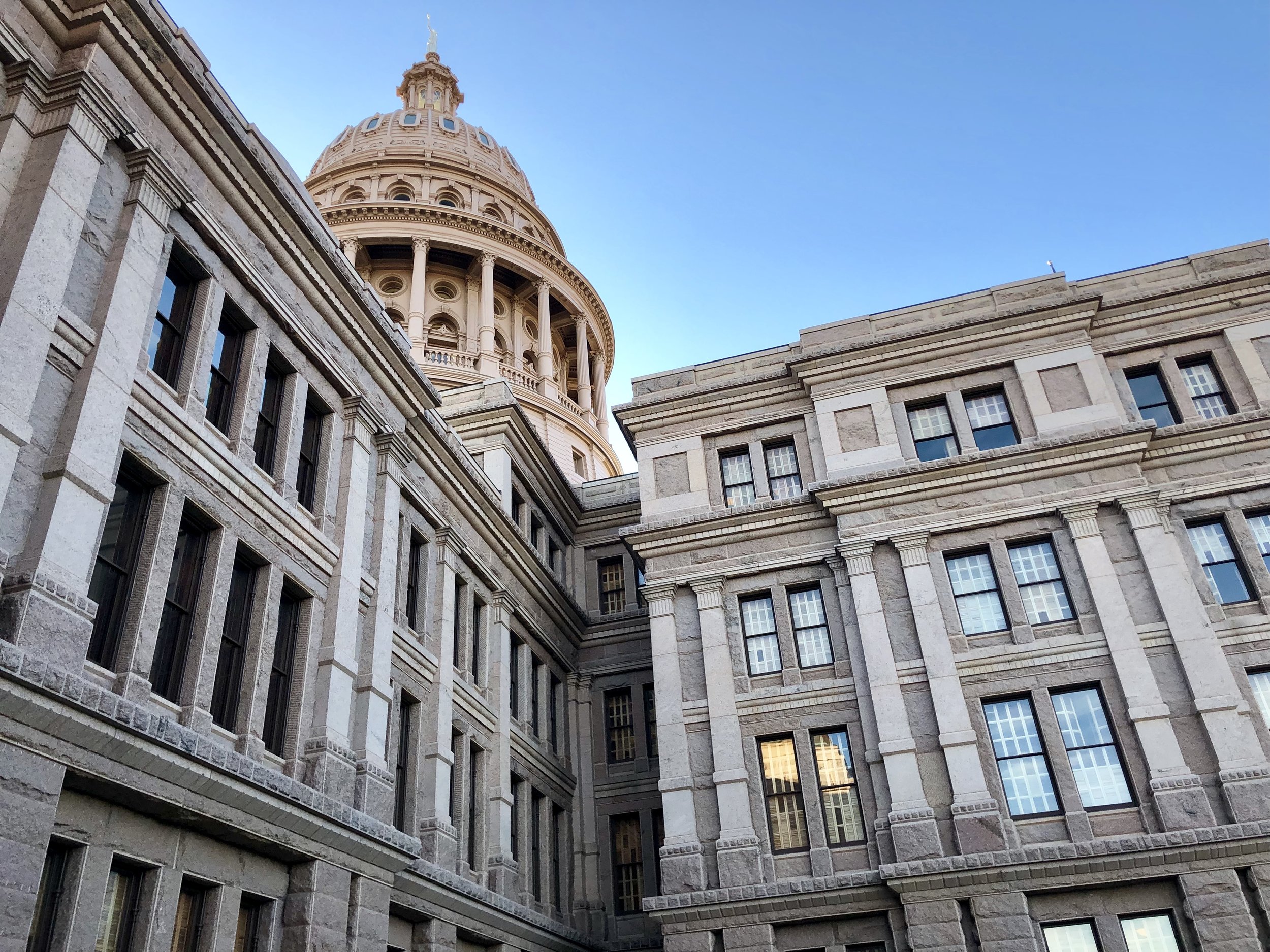
Texas Legislature Meets in Less Than 100 days
With the coronavirus pandemic continuing to affect everyday life, Texas legislators know that it won't be business as usual at the Capitol during the 2021 legislative session. But how different things will be is still an issue they're working to resolve.
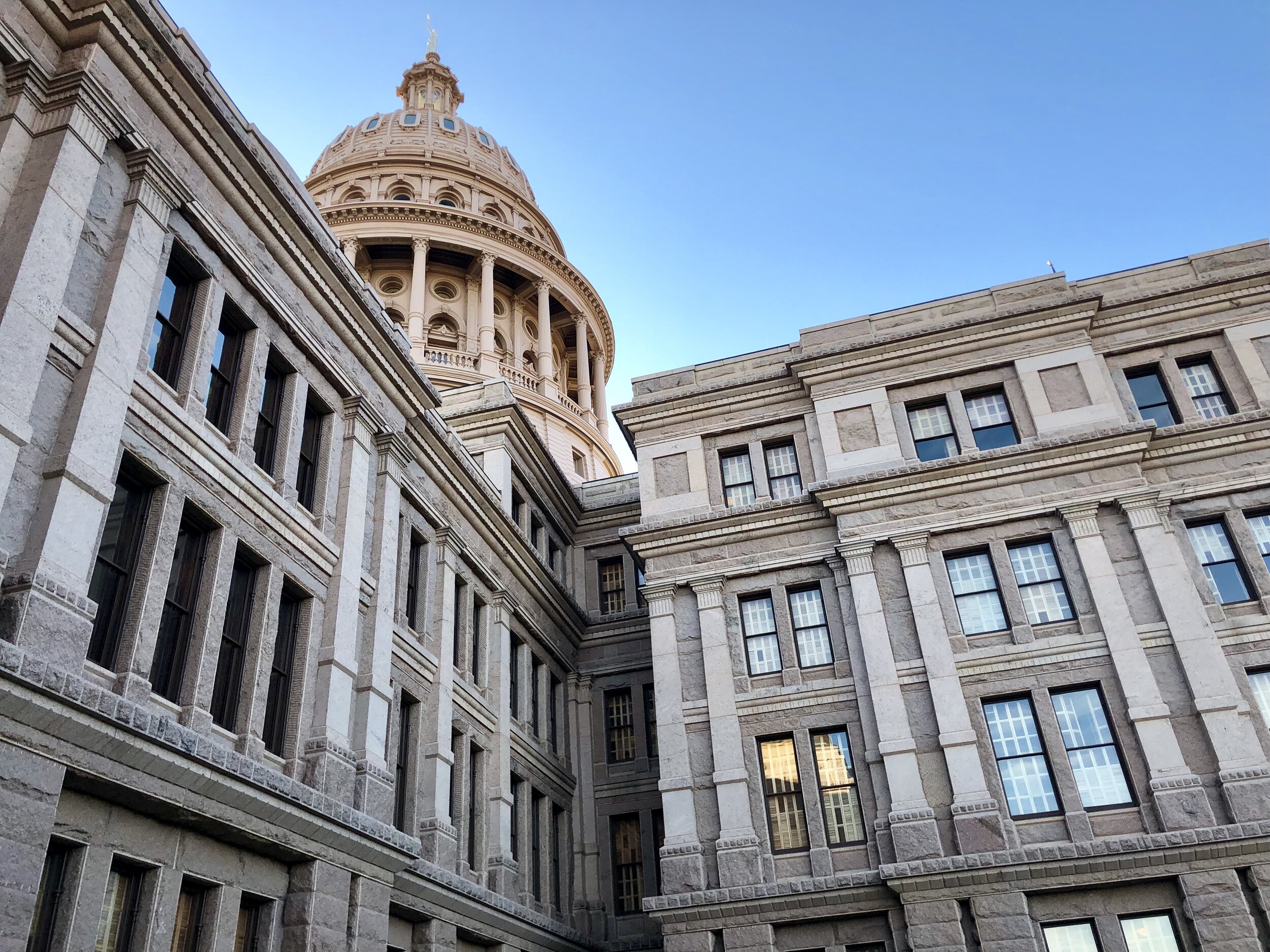
The Texas Legislature meets in less than 100 days. Nobody knows how the session will look.
"The Texas Legislature meets in less than 100 days. Nobody knows how the session will look." was first published by The Texas Tribune, a nonprofit, nonpartisan media organization that informs Texans — and engages with them — about public policy, politics, government and statewide issues.
Sign up for The Brief, our daily newsletter that keeps readers up to speed on the most essential Texas news.
The Texas Capitol is a bustling place when the Legislature is in session — the elevators are crowded, the hallways are packed, the committee hearing rooms are overflowing and the chamber floors are covered with state lawmakers.
But with less than 100 days until the 87th regular session and the coronavirus pandemic still upending once-regular ways of life, it’s unclear what typical functions at the Capitol will look like in January, or whether they will even exist.
That uncertainty this close to the session could have ramifications for what members say will be one of the toughest legislative sessions in recent years: tackling billions of dollars in shortfalls to the state budget, undergoing the process of redrawing the state’s political maps, and navigating issues like health care and public education that have been a focus during the pandemic.
On top of that, the Capitol has been closed to most everyone for months, prompting questions about the access that the public will have to the legislative process.
Senate and House members spearheading logistical discussions say that while much remains up in the air, the two chambers are working together to implement session rules that are consistent for both chambers. With wildly different dynamics in the 31-person Senate and the 150-person House, though, some suggest that the two chambers may not end up on the same page.
“Our primary concern is safety, transparency and public access,” said state Rep. Donna Howard, an Austin Democrat who serves as vice chair of the House Administration Committee. “There’s so much up in the air.”
State Rep. Charlie Geren, R-Fort Worth, chair of the committee, said the House is “in conversation with the lieutenant governor’s office,” but noted that “until there’s a presumed speaker, we don’t have a lot of guidance” in the lower chamber.
To Geren’s point, there’s only so much the House can do to prepare for the next session when its speaker is retiring and control of the lower chamber could flip to Democrats in November. There aren’t any declared candidates yet in the race to replace Republican House Speaker Dennis Bonnen. However, if a member collected the votes needed to win before January, they could become the presumptive speaker and informally lay the groundwork on what protocols would be in place.
On the Senate side, rumors have lingered for weeks over what Lt. Gov. Dan Patrick has told senators to expect come January. On a recent call with Senate chairs, according to several people who had knowledge of the call but weren’t authorized to speak on the record, Patrick outlined a worst-case scenario that involved limiting the legislation allowed for consideration and banning the public, press and lobbyists from entering the chamber.
A senior adviser for Patrick declined to comment for this story. And state Sen. Bryan Hughes, a Mineola Republican who chairs the Senate Administration Committee, did not respond to requests for comment.
Some decisions have already been made. Plexiglass dividers have been installed in several House committee hearing rooms, Geren said. Such barriers, he said, won’t be installed on the 150 House floor desks in the chamber after a trial run with a couple of them because they would interfere with the light used by new mobile sanitizing machines, as The Dallas Morning News first reported. House and Senate offices have also offered free webcams to offices in preparation for conducting more business virtually.
The Legislature, though, still faces a list of seemingly never-ending questions: Should temperature checks or some other form of screening be required before people enter the building? How can the House spread out 150 desks on the chamber floor — and will press and essential staff still be allowed on it? How can the public testify on legislation in committee hearing rooms, particularly on measures that generate a lot of interest?
Buoying those questions are layers of uncertainty about whether the virus will spike this winter, whether a vaccine will be available — and accessible — and, heading into the November election, whether Democrats will have control over the House, which could mean a change in leadership style to counter the GOP-controlled Legislature.
In August, Geren sent members results from a House survey over how and when the Capitol should reopen. Not every member responded, but those who answered questions about requiring temperature checks upon entering the Capitol and requiring face masks while inside committee rooms and public meeting spaces overwhelmingly supported those measures.
Howard told the Tribune that members are considering different sorts of screening protocols for how the public enters the Capitol but that no decisions have been made on what that could look like.
Since mid-March, the Capitol has been closed to the public, preventing members from holding interim committee hearings inside the building with public testimony. Those hearings are usually scheduled to help members consider or research business that could come up during the next session.
On Monday, hearing notices were posted for Senate Higher Education and Education interim committee hearings, both of which are set to happen next week. Each notice states that access to the Capitol “is limited to legislators and staff only” — and that only invited testimony will be allowed. “Invited testimony will be conducted via video-conference,” the notices say.
As a sort of workaround in the House, the speaker’s office released a memo in July detailing three options for how to conduct committee business while also adhering to lower-chamber rules, which do not allow for virtual hearings. Some committees have carried out interim business following that guidance.
Still, Democrats and Republicans have called on Gov. Greg Abbott, who oversees the Capitol, to reopen the building in recent weeks, arguing that if in-person fundraisers and public schools can resume, so can interim committee hearings. Such requests have gone unanswered publicly, and a spokesperson for the governor did not respond to a request for comment for this article. A spokesperson for the State Preservation Board also declined to comment.
“It certainly looks like we’re not going to have anything open before session starts,” Howard said. “We’ve really had no opportunity to have interim hearings, which has been extremely frustrating.”
State Rep. Phil King, a Weatherford Republican who chairs the House Redistricting Committee, said that “right now, we’re just locked out” — and added that it’s his “strong preference” that the Capitol reopen as soon as possible.
“I think it’s time now,” he said.
In the meantime, some members are already mapping out what office-specific guidelines they may issue for the 87th session. While most members say they are waiting to finalize those plans until closer to January, a number of them have already laid out protocols.
State Rep. Jon Rosenthal’s office, for example, has established a set of guidelines that staff and the lawmaker “will adhere to independent of rules and procedures the House Administration Committee provides the members for the 87th Legislative session,” according to a memo from the Houston Democrat’s office and assuming he wins reelection.
Masks will be required to enter Rosenthal’s Capitol office, which will not allow more than six people inside at a time. Rosenthal and his staff, the memo says, will also be tested for the virus “a minimum of once per week.” And interns, should they be hired, will work from home unless “dramatic changes happen” to prevent the spread of the virus.
On the other hand, state Rep. Briscoe Cain, a Republican from Deer Park and a member of the hardline conservative House Freedom Caucus, said he and his staff “absolutely will not” mandate masks — and that his “office will be open to all just as it has been since I was first elected.”
“It won’t bother me if visitors want to wear [a mask], I’m not going to make them take them off,” Cain told the Tribune. “In 2017 or 2019, if someone wanted to wear a mask, I would not have cared.”
Another Republican, state Rep. Dade Phelan of Beaumont, said his office is considering limiting staff and the number of visitors allowed in the office at one time. He said his office is also thinking about trying to move meetings online, though no decisions have been made yet. Across the rotunda, state Sen. Borris Miles’ staff members said they have already installed a plexiglass shield at the front desk in the Houston Democrat’s office.
Meanwhile, a group of House Democrats including state Reps. Joe Moody of El Paso and John Turner of Dallas have spent the past several months working on a governance platform to add to the conversation about what the session should look like.
“Keep the ‘People’s House’ accessible to all who wish to safely participate,” read a line in a one-pager that was presented at the House Democratic Caucus’ recent virtual retreat. “Institute daily COVID checks for everyone entering the Texas Capitol,” reads another. Another one: “Propose penalties to discourage anyone from flouting pandemic rules.”
The pandemic has, of course, impacted other issues tied to the Legislature and its usual timeline. In addition to addressing the billions of dollars in shortfalls to the state budget and other core issues during session, state lawmakers are also set to undergo the once-in-a-decade process of redrawing the state’s political maps.
The pandemic has already halted several hearings that both the House and Senate redistricting committees had scheduled across the state during the interim. And, on top of that, King, chair of the House Redistricting Committee, said the census data that helps lawmakers draw political maps is not expected to arrive until at least June — which could put the Legislature on track to work beyond the 140-day regular session.
“I think we’re headed for a special session on redistricting regardless,” King told the Tribune.
Others agree. At a virtual event in July, the lieutenant governor said the Legislature could be in session until at least September, citing the budget and redistricting.
“I’ve told my staff and I’ve told senators,” Patrick said, “don’t plan any vacations until maybe after Sept. 30 of next year.”
Disclosure: The State Preservation Board has been a financial supporter of The Texas Tribune, a nonprofit, nonpartisan news organization that is funded in part by donations from members, foundations and corporate sponsors. Financial supporters play no role in the Tribune's journalism. Find a complete list of them here.
This article originally appeared in The Texas Tribune at https://www.texastribune.org/2020/10/06/texas-legislature-coronavirus/.
The Texas Tribune is proud to celebrate 10 years of exceptional journalism for an exceptional state. Explore the next 10 years with us.
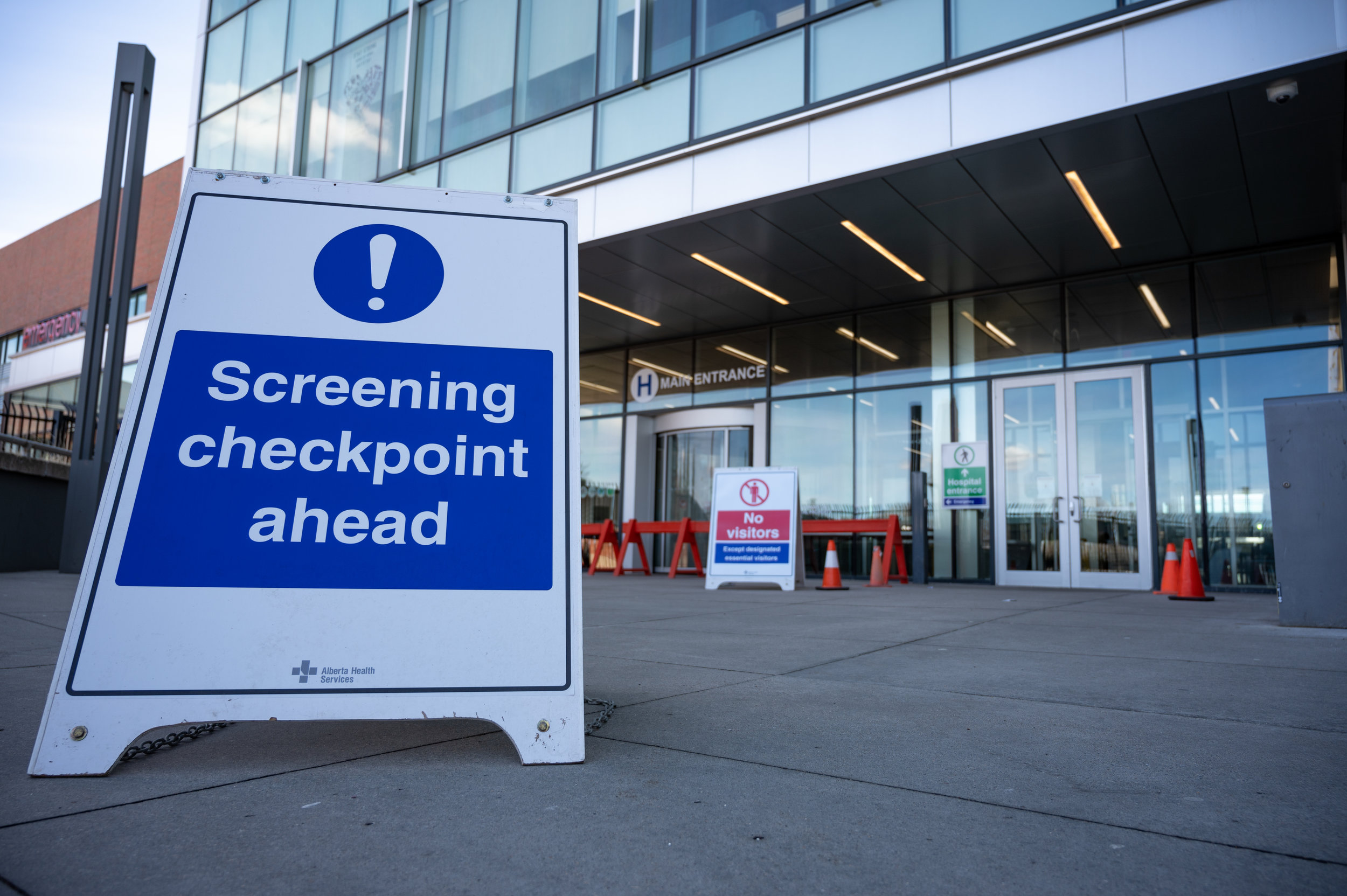
Students Reject Coronavirus Testing
Halfway through the semester, schools are reporting participation rates far below their goals, prompting at least one school to go so far as to offer prizes to students who volunteer to get a coronavirus test.
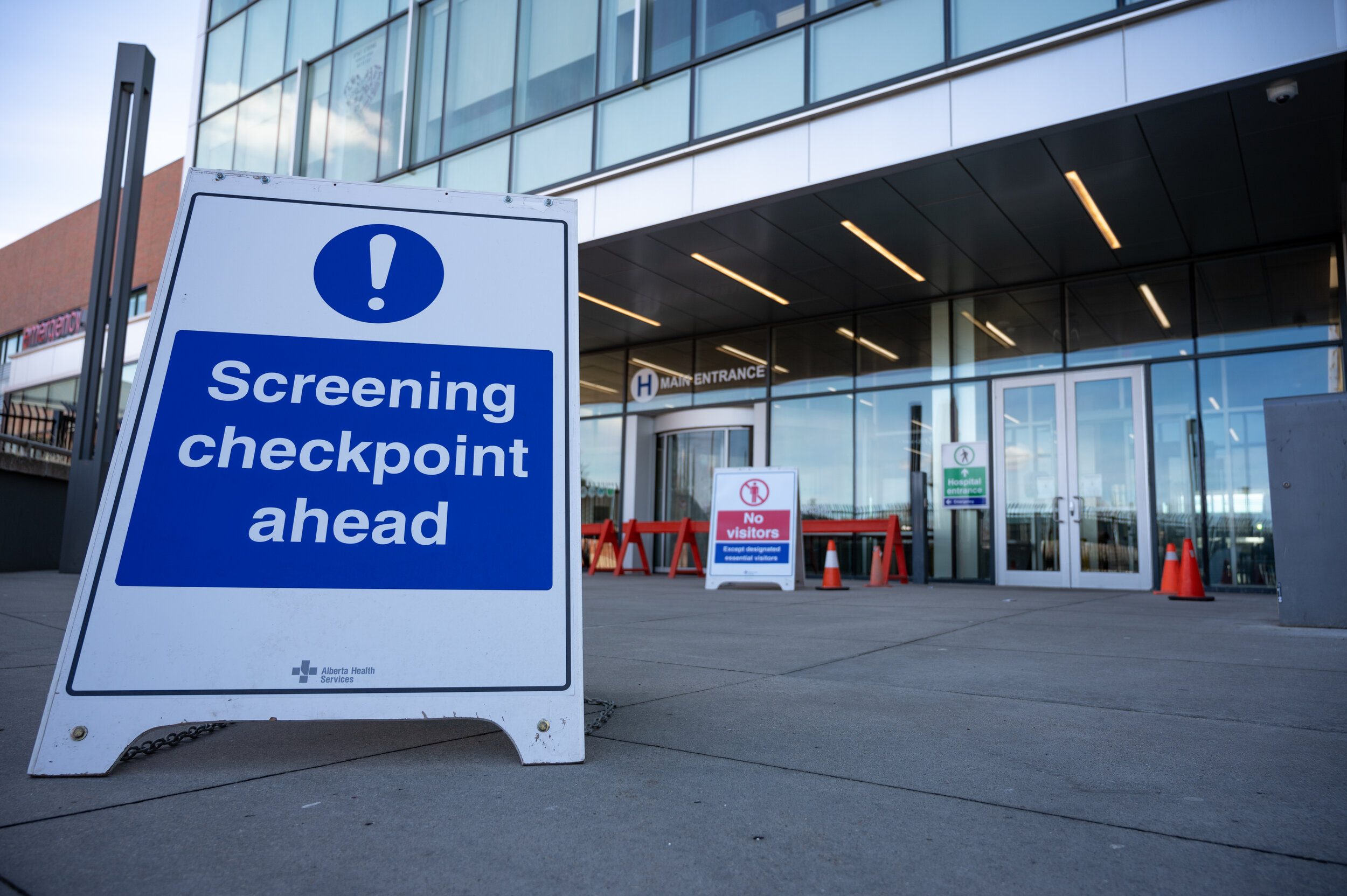
Texas colleges offer free coronavirus tests. Why aren't more students getting tested?
"Texas colleges offer free coronavirus tests. Why aren't more students getting tested?" was first published by The Texas Tribune, a nonprofit, nonpartisan media organization that informs Texans — and engages with them — about public policy, politics, government and statewide issues.
Texas colleges and universities spent the summer months bulking up their testing capacity to catch COVID-19 outbreaks fueled by students who are infected but don’t show symptoms.
The University of Texas at Austin said it could test up to 5,000 asymptomatic students, faculty and staff weekly. Texas A&M University trumpeted a similar goal of testing more than 5,000 students each week – about 7% of the student body. And the University of Texas at El Paso, with about 25,000 students, said it had the capacity to test up to 2,500 campus members weekly.
But halfway through the semester, schools are reporting participation rates far below their goals, prompting at least one school to go so far as to offer prizes to students who volunteer to get a coronavirus test.
UT-Austin, which has more than 50,000 students, has only required students to be tested before attending football games. During the first five weeks of the semester, the school had the capacity to test 25,000 community members but tested only 8,870 – an average of about 1,770 per week. That included the 1,198 students tested for the first home football game on Sept. 12.
“Why aren’t we testing 5,000 people per week? The answer, in part, is that we have fewer than 5,000 people a week who have been willing to take the tests,” reads a Sept. 28 memo from the UT-Austin Faculty Council.
Texas A&M conducted 6,195 tests in its first two rounds of random testing through Sept. 12. Meanwhile UT-El Paso, which tested 6,691 campus members from Aug. 17 to Sept. 18, has yet to break 2,000 weekly tests, the El Paso Times reports.
Experts say routine testing is crucial to stomping out “silent spread” on college campuses, as the CDC estimates 40% of COVID-19 infections are asymptomatic. And school officials rely on the results to get an accurate snapshot of the community’s health.
Major Texas universities have already mandated rigorous testing regimens for athletes, and some schools in other parts of the country require students and employees to get tested multiple times a week. But if the goal is to identify people who might trigger an outbreak on campus, waiting for students and staff to volunteer to get tested “doesn’t make a whole lot of sense,” said David Paltiel, a professor at the Yale School of Public Health.
“Frankly, I think the whole idea is flawed from the get-go,” Paltiel said. “Unless you're going to have a routine program that you require the entire population to adhere to, I just don't know what you're doing.”
School officials are stopping short of calling testing participation a problem, even as they work to increase it.
Shawn Gibbs, dean of the School of Public Health at Texas A&M, said participation is “pretty much what we expected it to be.”
“Our participation rate isn’t low,” he said. “We always would like higher participation, and we're in the process, like everyone else, of taking a look at the students who aren't participating and trying to figure out ways to incentivize participation.”
At Texas A&M, that means appealing to “selfless service,” one of the Aggie core values, and emphasizing that the saliva-based tests are free, quick and easy, Gibbs said. The flagship College Station campus reported 144 active cases as of Sept. 29.
UT-Austin’s goal is to test 1,000 asymptomatic people per day, and participation is gradually building in that direction, said Michael Godwin, program director of the university’s proactive community testing. Monday was “a really great day,” he said, with close to 700 people coming out. The flagship reported 67 estimated active cases as of Sept. 30.
To boost participation, the school is launching an incentive program, with raffle prizes for students including $50 gift cards to local and national vendors, Godwin said. The university has also enlisted professors to make class-wide announcements and deployed ads on Canvas, its online learning platform.
UT-Austin faculty participation in the testing has been “very low,” according to the Sept. 28 Faculty Council memo.
“I don’t think anyone expected to see 5,000 people in the first week,” Godwin said. “It takes a little bit of time to get the word out, to get the process set up and working well, and … we’ll continue to build on what we have and get more people in the door to get tested regularly.”
Mandatory testing at Baylor
Students might dodge invitations to test for a number of reasons – especially if they don’t feel sick, said Diana Cervantes, an epidemiologist at the University of North Texas Health Science Center. Students may also be avoiding the inconvenience of quarantines in the event they do test positive.
“Let's say I think I had a high-risk exposure and I think that testing positive is going to mean something detrimental to me, maybe I'd decide not to get tested,” Cervantes said.
Julia Elder, a UT-Austin master’s student, said she has not taken the university up on its offers to get tested because she worries about being exposed to the virus during her appointment. Elder hasn’t eaten in a restaurant or socially interacted with anyone since March. She takes online classes and only leaves the West Campus apartment she shares with her twin sister to pick up food.
“I definitely have wanted to get tested … but it seems like more interaction than I do on a daily basis,” Elder said, adding that she recently drove past the health center and saw a line of students wrapped around the building. “It seems like an unnecessary risk to take if I feel fine.”
Some universities are making testing mandatory.
At the University of Illinois Urbana-Champaign, students and employees must get tested twice a week. They’re testing about 10,000 people per day, and reporting positivity rates below a half of a percent. The university feels “very confident” in its plan, in part because it’s mandatory, said Robin Neal Kaler, associate chancellor of public affairs at UIUC.
“Our data scientists showed if you tested the vast majority of people twice a week … that would be enough to slow the spread, to keep potential outbreaks under control, and to let you know about them quickly enough that you can deal with them,” Kaler said.
“But that only works if it's mandatory testing. And it only works if you're testing basically the entire population, which is what we decided to do,” she added.
In Texas, Baylor University is one of the only institutions to require testing. The private Christian university chooses 5% of students and 5% of employees for mandatory testing each week; failure to comply may result in disciplinary action.
Unlike other Texas universities, Baylor also required a negative test from students and employees before they returned to campus in August. The school reported 62 active cases as of Oct. 1.
“We felt ... we needed to make it mandatory partly because there was some concern if people were left on their own, they would not want to be tested,” said Jim Marsh, dean for student health and wellness at Baylor. He added that even though the testing is mandatory, the school gives students raffle prizes such as meal vouchers, football tickets and scholarships for participating.
Legality in question
So far, none of the major public universities in Texas require testing – though some have left the door open.
Godwin said state law restricts UT-Austin’s authority to require testing “as a prerequisite to accessing any kind of educational benefit, or work, in the case of faculty and staff.”
“We are following the advice of the Office of the Attorney General,” UT spokesperson J.B. Bird said in an email. “State universities have not been delegated the authority to mandate testing as a requirement for pursuing an education.”
A spokesperson for the Texas attorney general's office said they can’t comment on whether it’s legal to require students to get tested because the office hasn’t been asked to give an official opinion on the matter.
In September, UT-Austin students had to test negative to attend a football game against UT-El Paso, even though the other 15,000 fans did not. Godwin said testing was allowed to be required in that instance because football games are not considered an educational benefit.
But Texas A&M has said it will move to mandatory testing if school officials deem it necessary.
“Our legal view is that we have the legal authority to require random testing on campus if it is necessary to protect public health and safety, but the issue has not been squarely addressed by the courts,” said System spokesperson Laylan Copelin. “So far, voluntary participation has been sufficient to meet the public health goal and mandatory testing is not necessary.”
For now, school officials hope their messaging and prizes will turn out more students, though Elder, the UT master’s student, questions whether it will be enough.
“Anything short of a reduction in tuition, there's no incentive they could provide anyone for getting tested,” Elder said.
Disclosure: The University of Texas at Austin, Texas A&M University, the University of Texas at El Paso, the University of North Texas and Baylor University have been financial supporters of The Texas Tribune, a nonprofit, nonpartisan news organization that is funded in part by donations from members, foundations and corporate sponsors. Financial supporters play no role in the Tribune's journalism. Find a complete list of them here.
This article originally appeared in The Texas Tribune at https://www.texastribune.org/2020/10/05/texas-coronavirus-college-free-tests/.
The Texas Tribune is proud to celebrate 10 years of exceptional journalism for an exceptional state. Explore the next 10 years with us.

Accusations Against Texas Attorney General Ken Paxton "Raise Serious Concerns"
Seven senior officials said in a letter obtained by the Austin American-Statesman and KVUE that they have reason to believe Paxton should be investigated for "abuse of office, bribery and other potential criminal offenses."
Gov. Greg Abbott says accusations against Texas Attorney General Ken Paxton "raise serious concerns"
"Gov. Greg Abbott says accusations against Texas Attorney General Ken Paxton "raise serious concerns"" was first published by The Texas Tribune, a nonprofit, nonpartisan media organization that informs Texans — and engages with them — about public policy, politics, government and statewide issues.
Senior officials in the Texas Attorney General's Office have asked federal law enforcement to "investigate allegations of improper influence, abuse of office, bribery and other potential crimes" by their boss, the Austin-American Statesman and KVUE-TV first reported Saturday.
The senior staff members, including Jeff Mateer, who resigned from his post as Paxton’s top aide this week after several years leading the agency, notified the agency’s human resources director that they sought the investigation.
“We have a good faith belief that the attorney general is violating federal and/or state law including prohibitions related to improper influence, abuse of office, bribery and other potential criminal offenses,” seven agency leaders wrote in a one-page letter obtained by the Statesman.
The brief letter, dated Oct. 1, says the officials notified law enforcement of a potential crime on Sept. 30, but does not provide detailed accusations. The officials also say they notified Paxton himself of the accusation via text message on Oct. 1.
Paxton, a second-term state official and former state legislator who serves as co-chair of the Lawyers for Trump coalition, has been under indictment for more than five years on felony charges of securities fraud. Paxton has yet to go to trial on the charges amid side battles over where the case will be heard and how much the special prosecutors appointed to take the case to trial will be paid.
The Houston Chronicle reported Sunday that the allegations are tied to Paxton's relationship with Nate Paul, an Austin real estate investor and campaign donor, citing the text message Mateer and the other officials sent to Paxton last week.
"General Paxton, yesterday, each of the individuals on this text chain made a good faith report of violations of law by you to an appropriate law enforcement authority concerning your relationship and activities with Nate Paul," Mateer told Paxton in the Oct. 1 text, obtained by the Chronicle.
According to the report, Mateer and the other officials felt compelled to act after Paxton allegedly appointed a special prosecutor to target "adversaries" of Paul.
A spokeswoman for the attorney general’s office said in a statement that "the complaint filed against Attorney General Paxton was done to impede an ongoing investigation into criminal wrongdoing by public officials including employees of this office. Making false claims is a very serious matter and we plan to investigate this to the fullest extent of the law.”
She declined to comment further, citing an open investigation.
Ryan Bangert, the deputy first assistant attorney general and one of the seven aides who signed on to the letter, wrote to agency staff Sunday encouraging them "to ensure the agency continues its important work without interruption."
"I write to assure you that the executive team remains committed to serving you, this office, and the people of Texas. The work we do together makes a difference every day in the lives of our fellow citizens," Bangert wrote. "Your work, your sacrifice, and your dedication to this office inspire us all."
Meanwhile, top Texas Republicans reacted cautiously to the allegations against Paxton.
"These allegations raise serious concerns," Gov. Greg Abbott said Sunday in a prepared statement. "I will withhold further comment until the results of any investigation are complete."
Lt. Gov. Dan Patrick called the news "obviously concerning."
"I learned about this from media reports," Patrick said in a statement. "I will wait until the investigation is complete before making any additional comments."
The office of House Speaker Dennis Bonnen did not immediately return requests for comment.
An attorney with Paxton's defense team in the securities fraud case, Philip Hilder, declined to comment. Brian Wice, one of the special prosecutors on the case, said Sunday that "we're going to look into this," but declined to elaborate further. It's not clear whether the latest allegations are related to the pending securities fraud charges.
Jordan Berry, a political adviser to Paxton, confirmed Sunday that he had resigned in the wake of the allegations.
Michelle Lee, a public affairs officer for the FBI, declined to comment on the matter, citing internal policy within the FBI and the U.S. Department of Justice not to comment on the existence of pending or potential investigations. A spokesman for the U.S. Attorney for the region said "we have no comment." Travis County District Attorney Margaret Moore said Saturday evening "we do not have an investigation."
Paxton has faced numerous questions over his ethics over his more than a decade in public life. To help pay for his stacked team of defense attorneys, he has collected hundreds of thousands of dollars in gifts for his legal defense fund, claiming the contributions came from “family friends” and are exempt from a state bribery law that bars elected officials from receiving gifts from people who are subject to their authority.
In the securities fraud charges that are still pending, Paxton is accused of convincing investors to buy stock in a technology firm without disclosing that he would be compensated for it. He has maintained his innocence and criticized the prosecution as politically motivated. In 2014, the Texas State Securities Board fined Paxton $1,000 for soliciting investment clients without being registered, and he signed a disciplinary order without disputing its findings.
Last year, his wife, state Sen. Angela Paxton, filed a bill that would have expanded her husband’s power as attorney general, giving him the power to exempt individuals from state regulations like the one he has been charged with violating.
In 2018, Paxton’s office filed — and then abruptly recalled — a formal court brief in a lawsuit over Plano’s zoning policies, in a move that his supporters attributed to political influence from conservatives in his home county.
Paxton, a conservative who has often elbowed for airtime as the state’s top culture warrior, has kept up a busy and high-profile role during the coronavirus pandemic.
This spring, he declared that Gov. Greg Abbott’s ban on elective medical procedures, an effort to conserve hospital resources for coronavirus patients, also barred abortions in the state, sparking a lawsuit that would drag on for weeks and force hundreds of women to cancel appointments to terminate their pregnancies. His office threatened to sue the state’s biggest cities if they did not roll back coronavirus-related safety precautions, including mask mandates, and told local officials they could not keep landlords from evicting their tenants during the pandemic.
Paxton used the power of his office to lean on a Colorado county after it shut its doors to vacation home owners — including a top donor.
Paxton has led major multi-state lawsuits to overturn laws like the Affordable Care Act and the Deferred Action for Childhood Arrivals program, often landing cases before the U.S. Supreme Court. He’s made equally political choices in the cases he chooses not to take. His office refused to defend a state agency, as it typically would, when it was sued for disciplining a state judge who refused to perform marriage ceremonies for same-sex couples. And it declined to defend the Texas Ethics Commission in a lawsuit brought by the hardline conservative group Empower Texans, a political donor.
Last year, he was a major player in Texas’ botched effort to review its voter rolls.
Paxton often boasts of his close relationship with the president, frequently greeting him on the tarmac when Air Force One touches down in Texas, and sharing stories during public appearances about their communication on major Texas-led litigation — the time Trump called while Paxton was in the shower is a favorite.
In 2018, Paxton narrowly bested his Democratic opponent, Justin Nelson, to win reelection in an unexpectedly tight race. Nelson had made Paxton’s indictments the centerpiece of his campaign.
“Ken Paxton is the top law enforcement official in the state,” Texas Democratic Party Chair Gilberto Hinojosa said in a statement Saturday. “Yet, he has proven for years that he cannot follow the law himself.”
Calls could build in the coming days among other Republicans for Paxton to more specifically address the charges or resign. On Sunday, state Rep. Sarah Davis, a Houston Republican representing a district that Democrats are targeting this year, became the first known GOP member at the Legislature to suggest Paxton resign if he does not "quickly address these allegations."
"Although innocent until proven guilty, AG Paxton has been under indictment for the past five years," Davis tweeted. "With these new allegations of bribery and abuse of office, Paxton needs to quickly address these allegations or resign so he can devote his time to his own personal legal matters."
Cassandra Pollock, Patrick Svitek and Abby Livingston contributed reporting.
This article originally appeared in The Texas Tribune at https://www.texastribune.org/2020/10/03/texas-ken-paxton-bribery-investigation/.
The Texas Tribune is proud to celebrate 10 years of exceptional journalism for an exceptional state. Explore the next 10 years with us.

Event in Texas Postponed after President tests Positive for coronavirus
Donald Trump Jr. had been scheduled to appear in McAllen for a get-out-the-vote lunch event Friday, alongside Trump adviser Kimberly Guilfoyle.
Donald Trump Jr. event in Texas postponed after president tests positive for coronavirus
"Donald Trump Jr. event in Texas postponed after president tests positive for coronavirus" was first published by The Texas Tribune, a nonprofit, nonpartisan media organization that informs Texans — and engages with them — about public policy, politics, government and statewide issues.
The news that President Donald Trump and first ladyy Melania Trump have contracted the coronavirus brought prayers and widespread expressions of concern from Texas officials across the political spectrum on Friday — and the postponement of a Trump campaign event in the state that would have featured the president's son.
Donald Trump Jr. had been scheduled to appear in McAllen for a get-out-the-vote lunch event Friday, alongside Trump adviser Kimberly Guilfoyle. But local GOP officials said the event would be moved back to a later date "out of an abundance of caution."
"As many of you know, President Trump has tested for COVID19 and both Kimberly and Donald Trump Jr have been in close proximity to President Trump, our First Lady, Ivanka Trump, and Hope Hicks," the Hidalgo County GOP wrote on Facebook on Friday. "Kimberly Guilfoyle and Donald Trump Jr. will be in quarantine for the next couple of days until they test negative for COVID."
The party said the event will be rescheduled.
"The great news is, the event is not cancelled. It is postponed. We will see Donald Trump Jr. in Hidalgo County before Election Day," the party said.
Meanwhile, expressions of concern poured in from the state's elected officials. Gov. Greg Abbott said he was "lifting up prayers" for the president and first lady on Twitter at about 1 a.m. Friday, about an hour after the president announced the news.
"May God’s healing powers touch them, strengthen them, and raise them up," he said
U.S. Sen. Ted Cruz, R-Texas, also said he was praying for the president and first lady. That sentiment was echoed much of the Texas delegation in the U.S. House, with multiple members from both parties urging Texans to take the virus seriously.
"This virus should be taken very seriously - wishing them a full and speedy recovery," said U.S. Rep. Eddie Bernice Johnson, D-Dallas.
Heidi & I are praying for a full and swift recovery for @realDonaldTrump and @FLOTUS
— Ted Cruz (@tedcruz) October 2, 2020
Meanwhile, U.S. Rep. Louie Gohmert, R-Tyler, seemed to suggest on Twitter that Trump use the unproven drug hydroxychloroquine for treatment, even though in July the Food and Drug Administration revoked its emergency use authorization to treat COVID-19. The FDA found that the drug had no benefit for decreasing the likelihood of death or seeing recovery, but did provide a risk for heart rhythm problems. Gohmert tested positive for the virus in late July and has since recovered.
U.S. Rep. Joaquin Castro, D-San Antonio, also responded and asked that other members of Congress who were in close quarters with the president not show up for work Friday.
"That’s why we put in place proxy voting during this pandemic," Castro said. "Sincerely, A Co-worker."
This article originally appeared in The Texas Tribune at https://www.texastribune.org/2020/10/02/donald-trump-jr-texas-event/.
The Texas Tribune is proud to celebrate 10 years of exceptional journalism for an exceptional state. Explore the next 10 years with us.

Voting Rights Groups sue Gov. Greg Abbott Over Order to Close ballot Drop-off Locations
The Texas and National Leagues of United Latin American Citizens, the League of Women Voters of Texas and two Texas voters asked a federal judge in Austin to overturn the governor’s order.
Voters, voting rights groups sue Gov. Greg Abbott over order to close ballot drop-off locations
"Voters, voting rights groups sue Gov. Greg Abbott over order to close ballot drop-off locations" was first published by The Texas Tribune, a nonprofit, nonpartisan media organization that informs Texans — and engages with them — about public policy, politics, government and statewide issues.
Sign up for The Brief, our daily newsletter that keeps readers up to speed on the most essential Texas news.
Voting rights advocates and civic groups have rushed to the courthouse in a bid to block Republican Gov. Greg Abbott's Oct. 1 order allowing Texas counties no more than one drop-off location for voters casting absentee ballots, calling the directive an unconstitutional burden on the right to vote that will disproportionately impact voters of color in the state’s biggest cities.
The Texas and National Leagues of United Latin American Citizens, the League of Women Voters of Texas and two Texas voters asked a federal judge in Austin in a lawsuit filed late Thursday to overturn the governor’s order, which forced Travis and Harris counties — two of the state’s most important Democratic strongholds — to shutter a number of drop-off sites they had already opened this week.
“The impact of this eleventh-hour decisions is momentous, targets Texas’ most vulnerable voters—older voters, and voters with disabilities—and results in wild variations in access to absentee voting drop-off locations depending on the county a voter resides in,” attorneys for the groups argued. “It also results in predictable disproportionate impacts on minority communities that already hit hardest by the COVID-19 crisis.”
Attorneys also pointed out that Abbott was making a major change to election procedures just weeks away from an election — an action the state and its attorneys argued was improper in a separate federal lawsuit over straight-ticket voting.
Unprecedented numbers of Texas voters are requesting mail-in ballots for the highly charged election as the nation is in the grip of the coronavirus pandemic. Many of those voters are expected to drop off their ballots in person rather than entrusting them to the U.S. Postal Service, which has been plagued by cutbacks and doubts over its ability to deliver ballots early enough to be counted.
Texas Republicans have vigorously fought efforts to facilitate increased mail-in balloting, particularly in Harris County, the state's largest and a Democratic stronghold where voter turnout could prove pivotal in this year's election.
Asked about the lawsuit, Abbott spokesman John Wittman said the governor "has expanded access to voting."
Months ago, Abbott extended the early voting period by nearly a week and allowed voters to deliver their absentee ballots in person earlier than usual, citing the pandemic. His order this week limited where voters may turn in those ballots, not when.
Wittman added that the governor's Oct. 1 order concerns only absentee ballots, most of which he said are submitted by mail.
"The additional time provided for those who want to submit their mail-in ballot in person is sufficient to accommodate the limited number of people who have traditionally used that voting strategy," Wittman said.
But more absentee ballots than ever are expected to be cast this year — some counties have already sent out twice as many as usual — and there are concerns about delays from the U.S. Postal Service.
The lawsuit will have to move quickly, with early voting set to begin in less than two weeks on Oct. 13.
Harris and Travis counties had each set up multiple locations for accepting absentee ballots and had already begun accepting them before Abbott issued his order shutting down the satellite locations. Voting rights experts say access to these locations is especially important given concerns over U.S. Postal Service delays and that closing them will disproportionately impact voters with disabilities or without access to reliable transportation. Harris County is home to 2.4 million registered voters and stretches across some 1,700 square miles, more than the entire state of Rhode Island.
Ralph Edelbach of Cypress, an 82-year-old voter among those suing Abbott, had planned to drop his ballot off at a Harris County location that was 16 miles from his home — but now will have to travel 36 miles, nearly 90 minutes round trip, to reach the only location Abbott has allowed to stay open, according to court documents.
At a press conference Friday morning, Harris County Clerk Chris Hollins said he could reopen the shuttered locations "at the drop of a dime."
“Ultimately, anything that’s done to decrease voter convenience, to put obstacles in the way of the voter, is voter suppression, and will lead to disenfranchisement,” he said.
Abbott’s order, which came a day after the Texas solicitor general approved Harris County’s plan for multiple locations under earlier guidance from the governor, also said counties must allow poll watchers to observe goings-on at ballot drop-off sites. Voting rights advocates fear that poll watchers, who are selected by candidates or political parties, will seek to intimidate voters, as has been documented in the past.
Abbott claimed the limits on drop-off locations were necessary to ensure election integrity. But he provided no evidence that the drop-off sites enable voter fraud, which experts say is rare.
And the procedures for delivering an absentee ballot are strict. Voters must present an approved form of identification, show up during specified hours and can only deliver their own ballots.
Texas is one of just a few states that is not allowing all voters to cast their ballots by mail during the coronavirus pandemic. Beyond extending the early voting timeframe, the state has done very little to expand Texans’ options for voting safely this fall. And its criteria for absentee ballots are unusually strict: Voters can vote by mail only if they are 65 or older, confined in jail but otherwise eligible, out of the county for the election period or cite a disability. The Texas Supreme Court has said that lack of immunity to the novel coronavirus does not itself constitute a disability, but that voters may consider that alongside their medical histories to decide whether they qualify.
Harris County started accepting completed applications Sept. 28, and had collected 39 as of Thursday evening. Travis County opened four locations Oct. 1.
Democrats and voting rights groups immediately condemned Abbott’s as an attempt at voter suppression.
Ross Ramsey contributed to this report.
Disclosure: The League of Women Voters has been a financial supporter of The Texas Tribune, a nonprofit, nonpartisan news organization that is funded in part by donations from members, foundations and corporate sponsors. Financial supporters play no role in the Tribune's journalism. Find a complete list of them here.
This article originally appeared in The Texas Tribune at https://www.texastribune.org/2020/10/02/texas-greg-abbott-ballot-drop-lawsuit/.
The Texas Tribune is proud to celebrate 10 years of exceptional journalism for an exceptional state. Explore the next 10 years with us.

Sales Tax Revenue in Texas Down 6.1%
"The COVID-19 pandemic and low price of crude oil continue to weigh on the Texas economy and sales tax revenue," Comptroller Glenn Hegar said.

September sales tax revenue in Texas down 6.1% from a year ago
"September sales tax revenue in Texas down 6.1% from a year ago" was first published by The Texas Tribune, a nonprofit, nonpartisan media organization that informs Texans — and engages with them — about public policy, politics, government and statewide issues.
Sign up for The Brief, our daily newsletter that keeps readers up to speed on the most essential Texas news.
Texas collected about $2.6 billion in state sales tax revenue in September, state Comptroller Glenn Hegar said Thursday. That total is 6.1% less than what the state collected in September 2019.
"The COVID-19 pandemic and low price of crude oil continue to weigh on the Texas economy and sales tax revenue," Hegar said in a news release. "As was the case the last month, state sales tax receipts from all major sectors, other than retail trade, were down compared with the same month last year, with the steepest declines in the oil and gas-related sectors."
State sales tax revenue is the state's single largest source of funding. The total revenue for July, August and September this year, Hegar said Thursday, was down 2.5% compared to the same period in 2019.
Receipts from restaurants, Hegar said, are still "significantly below pre-pandemic levels." Receipts from big box retailers generally increased, he said, while department stores and apparel stores saw a decline.
Other sources of state revenue are still being impacted by economic shutdowns related to the coronavirus pandemic. For example, Texas collected $78 million in revenue from alcoholic beverage taxes in September — down 33.7% from the same month last year. Earlier this month, Gov. Greg Abbott said restaurants in the state could expand dine-in service to 75% capacity but that bars must remain closed.
Another major tax, the hotel occupancy tax, is also down about 37% in revenue from the same month last year.
This article originally appeared in The Texas Tribune at https://www.texastribune.org/2020/10/01/texas-sales-tax-economy/.
The Texas Tribune is proud to celebrate 10 years of exceptional journalism for an exceptional state. Explore the next 10 years with us.

2020’s Top Races Won’t set Spending Records
Two years ago in Texas, interest and election turnout were juiced by a $125 million race for U.S. Senate. This year's ballot is topped by an extraordinary race for president, but the political spending at the top won't match 2018.

Analysis: Unlike the 2018 election in Texas, 2020’s top races won’t set spending records
"Analysis: Unlike the 2018 election in Texas, 2020’s top races won’t set spending records" was first published by The Texas Tribune, a nonprofit, nonpartisan media organization that informs Texans — and engages with them — about public policy, politics, government and statewide issues.
Editor's note: If you'd like an email notice whenever we publish Ross Ramsey's column, click here.
If you would like to listen to the column, just click on the play button below.
(Audio unavailable. Click here to listen on texastribune.org.)
Beto O’Rourke’s run at U.S. Sen. Ted Cruz two years ago doesn’t get the credit it’s due for upending the financial model for a statewide federal race in a big state like Texas.
MJ Hegar’s Senate race this year illustrates the problem challengers face here. The size of the state, and the expense of running in a place this big and with this many expensive television markets, keeps Texas races off the national party and political action committee lists of top targets every election cycle.
It’s an inefficient investment, from a national point of view. Even if you think you can beat an incumbent — U.S. Sen. John Cornyn, for example — it’s cheaper to support challengers in smaller, less expensive states.
From that national perspective, the prize in a Senate race is the same, no matter where you win. So why not invest where it’s cheap, preserving money that might be wasted in a big state for use in smaller states where you can reach a majority of voters for far less?
Much of O’Rourke’s money was non-institutional, raised both in and out of state from small donors reached online. By luck and design, he financed his statewide campaign without having to get the attention of the people in those national political strategy sessions in Washington. They were doing what they generally do, spending most of their money in what were seen as winnable races in states where campaigning is cheaper.
Still, that 2018 race between Cruz and O’Rourke was the most expensive in the country, with just over $125 million spent by the two campaigns, according to the Center for Responsive Politics. Cruz, who spent $45.6 million, defeated O’Rourke, who spent $79.1 million. But the close finish (a 2.6 percentage point gap) at the top of the ticket closed up other races.
Republicans in statewide contests still enjoyed what has become a customary sweep, but their margins were cut and are often used as evidence that Texas might not be as reliably Republican as it was just a few years ago. The Democrats won two congressional seats held by Republicans, and picked up a couple of seats in the Texas Senate and a dozen in the Texas House.
Maybe Texas has moved from the red political column into the purple one. The GOP strength in the state’s suburbs has been weakening, and national and out-of-state political pundits have been infected with the “Is Texas turning blue?” speculation familiar to the state’s natives.
Another possibility has to be included in the argument: Having a big spender, even a loser, in a race at the top of the ticket helps a political party’s down-ballot candidates. O’Rourke lost, but the excitement around that campaign — by both Democratic and Republican voters — boosted turnout for that midterm election to presidential election levels.
In 2020, presidential-level turnout should be a given. It’s hard to hide from a national race. But the state no longer has straight-ticket voting, as it did in 2018 (this is in litigation, but straight-ticket voting is dead for the moment), raising a question about how a good showing at the top of the ticket might help a party’s down-ballot candidates. And the campaigns at the top of the ticket aren’t spending big money in Texas.
New reports are due in the next few days, but through mid-year, according to CRP, the Senate race in Texas — with Cornyn and Hegar and the candidates who lost to them in the Republican and Democratic primaries — saw lower spending than contests in smaller states: Kentucky, Arizona, South Carolina, Maine, Michigan and Colorado.
To be fair, Hegar’s July report reflected the high spending and low cash-on-hand totals one might expect from a candidate who was then in the middle of a primary runoff election, and she’s getting some help from U.S. Senate Democrats. The numbers then were lopsided in Cornyn’s favor: He had $14.5 million on hand to her $900,000. And you’ve seen the results on television, among other places. The incumbent has been advertising for weeks. Hegar’s commercials have been sparse in comparison.
This is not a requiem. Far from it: Texas is still in pre-game mode. Early voting starts in two weeks (this is also in the courts, but currently on for Oct. 13). Presidential debates have begun. Hegar and Cornyn have a debate scheduled for Oct. 9. Texans can register to vote until Oct. 5.
The season is here. Voting will be over in five weeks, and we’ll have answers to all of our burning questions some time after that. A couple of those questions are related to finance and political trends. Was the 2018 election in Texas — with its high turnout and close races — the result of a spectacular and expensive competition for Senate? Or was it evidence of a more engaged and more evenly divided electorate?
This article originally appeared in The Texas Tribune at https://www.texastribune.org/2020/09/30/Texas-elections-2020-spending/.
The Texas Tribune is proud to celebrate 10 years of exceptional journalism for an exceptional state. Explore the next 10 years with us.

Border Leaders say Restrictions at International Bridges Should be Lifted
Local leaders say the federal government’s decision to extend a ban on nonessential travel across the U.S.-Mexico border is crippling their budgets and local businesses.

As Texas reopens, border leaders say restrictions at international bridges should be lifted
"As Texas reopens, border leaders say restrictions at international bridges should be lifted" was first published by The Texas Tribune, a nonprofit, nonpartisan media organization that informs Texans — and engages with them — about public policy, politics, government and statewide issues.
For a few days last spring, Amy Guadiar was able to take her mind off the shoppers from Mexico her store has been missing since the COVID-19 pandemic struck the borderland.
The government’s one-time stimulus checks, issued in April, briefly brought shoppers from El Paso back to Contigo, a downtown El Paso garment store that’s suffered financially since the Trump administration closed the southern border to nonessential crossers from Mexico in an effort to slow the spread of COVID-19. But the boost in business didn’t last.
“People came to shop after they received their checks,” she said. “But it’s difficult again.”
The international bridges that connect Texas and Mexico remain partially closed to noncitizens who can’t show their travel into Texas is considered essential, a definition that excludes people crossing for tourism or shopping. Last month, the Department of Homeland Security extended the policy until at least Oct. 21. The agency is also using additional screening measures, such as flagging more travelers for secondary inspections, to discourage nonessential traffic, which has made wait times even longer.
The hardening at the ports of entry along the border continues even as Gov. Greg Abbott relaxes COVID-19 restrictions for the rest of the state. Abbott announced earlier this month that stores, office parks and restaurants can now operate at 75% of their capacity, and college football is back with a limited number of fans in the seats. Because the bridges are under federal authority, Abbott’s orders don’t apply to border crossers.
That has some border leaders anxious over how long the restrictions at the bridges will last and how they’re going to keep afloat financially without the shoppers and the bridge tolls that are crucial to both businesses and local government budgets.
In Eagle Pass, bridge revenues, which make up half of the city’s revenue, are down by half, Mayor Luis Sifuentes said.
“We’ve had to make major adjustments and cut across the board in all departments,” Sifuentes said. “We passed a balanced budget, but it’s all dependent on the bridges to open up before January.”
In Laredo, home to the country’s busiest inland port, noncommercial and pedestrian crossings plummeted during the 2020 fiscal year compared with the year before. In fiscal year 2019, Laredo recorded about 4.4 million noncommercial vehicle crossings and 3.1 million pedestrian crossings. Those figures fell to 3.4 million and 2 million crossings, respectively, according to city statistics.
City officials in El Paso projected a $60 million loss in annual revenue earlier this year when it announced pay cuts and furloughs for about 400 employees. That was due, in part, to the lack of Mexican shoppers, who account for about 15% of retail trade, El Paso Mayor Dee Margo told local media in May. At that time, noncommercial crossings were down by a third, he said.
U.S. Rep. Henry Cuellar, D-Laredo, sent a pitch earlier this month to acting Department of Homeland Security Secretary Chad Wolf outlining a plan that would allow the United States to screen for the coronavirus and allow nonessential traffic to cross into Texas if people are free of the virus and its symptoms. The plan would enlist the private sector to conduct rapid COVID-19 tests at the border and includes quarantine procedures for people who test positive or who have traveled from a high-risk areas.
It’s unclear whether Homeland Security has responded to the proposal; Cuellar has since called out the Trump administration for its patchwork policies that he says unfairly target the border.
“Allowing individuals to fly into the U.S. but restricting travel through our land ports of entry is unfair treatment to the land ports,” Cuellar said in a Sept. 18 statement. “Since DHS is obviously uninterested in working with us on finding a solution, we must take it upon ourselves to create public-private partnerships to implement enhanced screening strategies. Hopefully, DHS does not stand in our way as we continue to fight for employees, business owners, and customers in our community who are facing the economic repercussions of COVID-19. We can balance the health of the individual and the health of the border economy.”
On Tuesday, the Texas Border Coalition, a group of elected officials and community and business leaders from the Texas-Mexico border, urged Wolf to lift the restrictions “to avoid further economic devastation” at the border.
“Instituting efficient and safe operations at our land ports will ensure that international travelers are able to contribute to our binational economy,” wrote Cameron County Judge and TBC Chairman Eddie Treviño Jr. “We need international travelers conducting crucial commercial activities to re-invigorate our economy, not waiting in line at the international ports of entry.”
For Mexican citizens still able to cross into the United States, the frustration is growing. Martha Ayala, 59, a health care worker who lives in El Paso as a legal permanent resident but travels to Ciudad Juárez to see her father, said earlier this month she drove from Odessa to El Paso with her father and dropped him off in Ciudad Juárez.
“I waited five hours to come back,” said Ayala, whose job allows her to cross the border as an essential worker. “It was less time [on the road] from Odessa to here than to come back from Juárez.”
She wonders why other Mexicans are still blocked from crossing the bridges now that Texas has mostly eliminated its COVID-19 restrictions.
“I think it’s political,” she said. “We come and go because of necessity, and not just to pass the time.”
In Eagle Pass, Sifuentes isn’t calling the border restrictions a political move, but he disagreed with the notion that Americans are spreading the virus after they return from Mexico.
“There has been no indication of people getting it from Mexico. There may be be a handful of cases, but overwhelmingly it’s people here gathering with family and friends,” he said. “I don’t know where they’re getting that.”
This article originally appeared in The Texas Tribune at https://www.texastribune.org/2020/09/29/texas-coronavirus-restrictions-international-bridges/.
The Texas Tribune is proud to celebrate 10 years of exceptional journalism for an exceptional state. Explore the next 10 years with us.
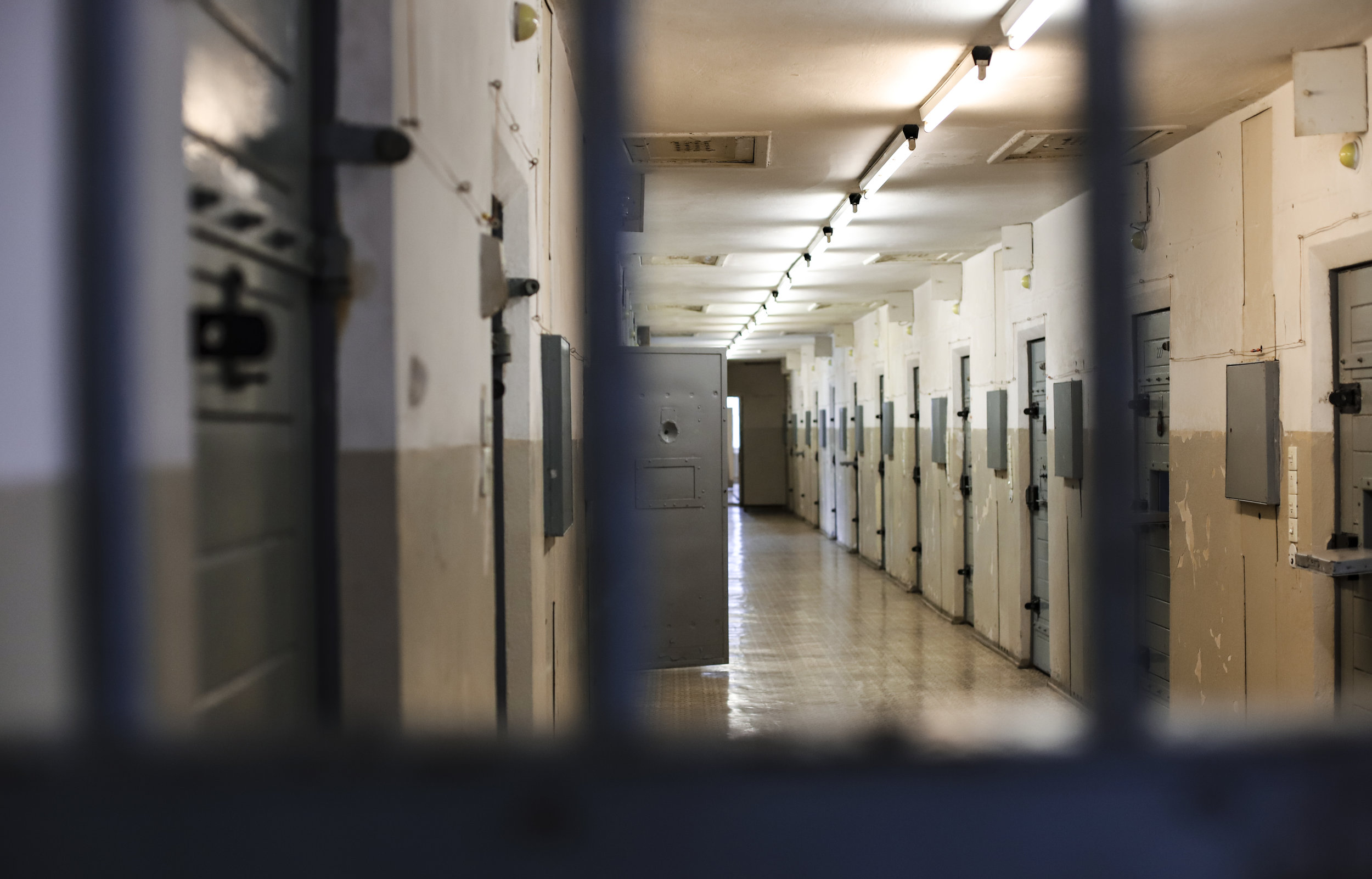
Federal Court - Texas Prisons Must Provide Hand Sanitizer for Some Geriatric Inmates
Texas has had more inmate deaths related to the coronavirus than any other prison system in the nation. Its death toll of at least 162 inmates outranks every other state as well as the federal prison system.
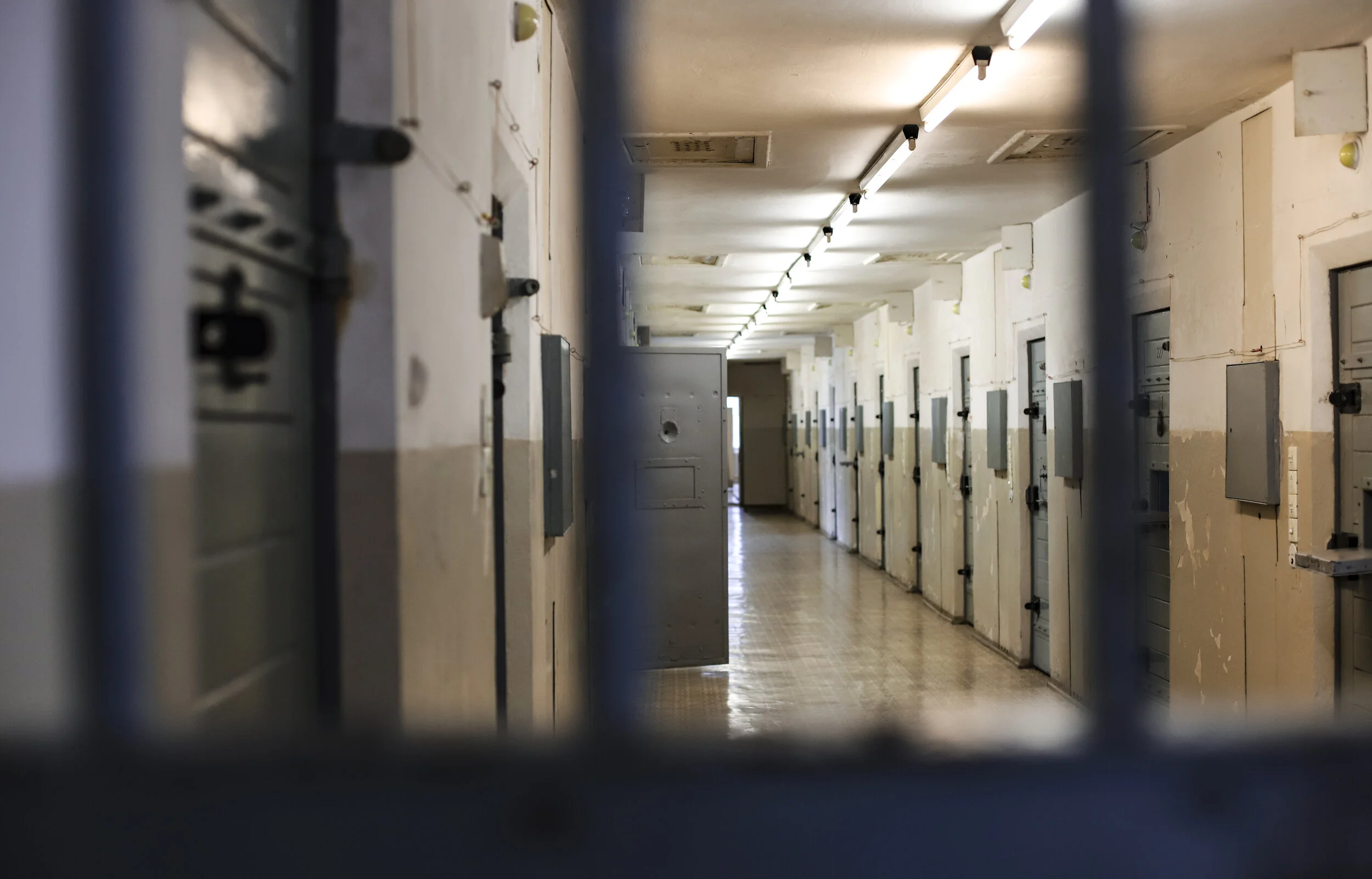
Federal court orders Texas prison system to provide hand sanitizer for some geriatric inmates during pandemic
"Federal court orders Texas prison system to provide hand sanitizer for some geriatric inmates during pandemic" was first published by The Texas Tribune, a nonprofit, nonpartisan media organization that informs Texans — and engages with them — about public policy, politics, government and statewide issues.
A federal judge ordered the Texas prison system on Tuesday to provide more protective measures against the coronavirus, like hand sanitizer for wheelchair-bound prisoners, at a prison for geriatric inmates.
After a weekslong trial that started in July, U.S. District Judge Keith Ellison ruled that Texas Department of Criminal Justice officials acted with deliberate indifference toward the inmates’ medical needs and recklessly disregarded obvious health risks during the pandemic.
“The Court acknowledges that [TDCJ officials] have taken a number of steps to address the spread of COVID-19 … at the Pack Unit,” Ellison wrote in his ruling. “But the Court views these measures as the most basic steps that TDCJ could have taken to prevent mass death within the prison walls on an unimaginable scale. Designing a policy and implementing some of the measures therein does not automatically satisfy Defendants’ constitutional obligations, especially in the face of an unprecedented public health crisis.”
Ellison, who has slammed the state prison system in another lawsuit over heat conditions, said he was dubious that TDCJ was implementing many of the procedures and policies it claimed to be. He cited officials’ text messages that revealed a confusion about coronavirus reporting among officials, modifications made just before trial to make the unit “look more favorable,” and staged visits to the prison as explanation for his skepticism.
The ruling follows a nearly four-week long trial in a lawsuit filed in March by older inmates against TDCJ and the Pack Unit, a prison near College Station whose population mostly consists of inmates over 65. The department is expected to appeal the order to the same court that previously halted Ellison’s pretrial, temporary ruling against the department, in part because it said TDCJ was already making efforts to contain the spread of the coronavirus.
Texas has had more inmate deaths related to the coronavirus than any other prison system in the nation. Its death toll of at least 162 inmates outranks every other state as well as the federal prison system. More than 20 Texas prison employees have also died with the virus.
Nearly 23,000 inmates and about 4,800 employees have tested positive for the virus since the pandemic was declared a Texas public health disaster in March, according to TDCJ reports.
At the Pack Unit, more than 500 inmates had tested positive for the virus by August 2, and 20 had died with it, according to trial records. TDCJ’s public reports on inmate deaths only include 17 Pack Unit deaths as of Tuesday, the second most behind 20 reported deaths at the Duncan Unit in East Texas — another geriatric facility.
Ellison’s permanent injunction includes many requirements that TDCJ has long said it already implemented, like providing unrestricted access to soap and water, sufficient cleaning supplies and face masks required for all staff and inmates. His injunction also requires, however, hand sanitizer to be provided to inmates that use a walker, a cane, crutches or a wheelchair. At trial, it was noted that wheelchair-bound inmates with unsanitized chairs could infect their hands with germs instantly after leaving the sink.
TDCJ has long fought against providing hand sanitizer for inmates, arguing it could be used as a fire accelerant or inmates could drink it. Inmates’ attorneys said the concerns were “disingenuous,” as fires are not a problem on the unit and inmates have plenty of flammable material, like paper.
Inmates at the Pack Unit sued the prison system in March as the coronavirus began to spread across the state, arguing its policies were "woefully inadequate" to protect the unit’s elderly and sick inmate population. The agencies' actual practices, they said, were even worse and violated the constitutional protection against cruel and unusual punishment. They asked for more protective gear, cleaning supplies and social distancing.
In a temporary ruling in April before the case went to trial, Ellison sided with the inmates and ordered TDCJ to make a slew of policy changes like providing hand sanitizer and face masks and testing all inmates for the virus. Though many of the demands, like providing masks and mass testing, had since been enacted by the department, TDCJ appealed to the U.S. 5th Circuit Court of Appeals.
Judges on the appeals court agreed that TDCJ had already met many of the ordered requirements, though one of the judges urged Ellison to hold a trial in the case as soon as possible.
The trial included testimony from several inmates, TDCJ officials and experts on health and prison conditions. During the weeks in the virtual courtroom, inmate janitors — some of whom are wheelchair-bound and otherwise disabled — said they didn’t have enough cleaning supplies, contact tracing wasn’t properly done and more and more people were getting sick and dying. John Keville, the inmates’ lead attorney, said in his closing arguments on Aug. 6, that two more inmates had died during the trial.
The prison’s warden testified that he thought his unit had been doing “everything within reason” to combat the virus. He said he didn’t think security staff specifically asked inmates how they were feeling, noting that would be for medical teams, though the department’s deputy executive director said in a pre-recorded deposition that officers are supposed to talk to inmates about their health.
This article originally appeared in The Texas Tribune at https://www.texastribune.org/2020/09/29/texas-prisons-coronavirus-protections/.
The Texas Tribune is proud to celebrate 10 years of exceptional journalism for an exceptional state. Explore the next 10 years with us.

Trump Nominates Amy Coney Barrett to Supreme Court
Both of Texas' Republican U.S. senators have indicated they support moving forward with the Supreme Court confirmation process less than two months before the election.

Amy Coney Barrett
President Donald Trump nominates Amy Coney Barrett to U.S. Supreme Court
"President Donald Trump nominates Amy Coney Barrett to U.S. Supreme Court" was first published by The Texas Tribune, a nonprofit, nonpartisan media organization that informs Texans — and engages with them — about public policy, politics, government and statewide issues.
President Donald Trump named U.S. appeals court Judge Amy Coney Barrett to the U.S. Supreme Court on Saturday, picking from a list of candidates that included U.S. Sen. Ted Cruz, R-Texas.
“It is my honor to name one of our nation’s most brilliant and gifted legal minds to the Supreme Court,” Trump said in the Rose Garden. “She is a woman of unparalleled achievement, towering intellect, sterling credentials and unyielding loyalty to the constitution.”
If confirmed by the Senate, Barrett, who sits on the Illinois-based 7th U.S. Circuit Court of Appeals, will replace the late Supreme Court Justice Ruth Bader Ginsburg, who died Sept. 18.
Her nomination will kick off what’s expected to be one of the most contentious confirmation battles in recent memory. Republicans say they intend to seat Barrett this year, even though the vacancy on the court opened up less than two months before Election Day. Democrats are determined to fight the nomination, noting that Republicans refused to confirm President Barack Obama’s nominee for the Supreme Court in 2016 when a seat came open 269 days from Election Day.
Both of Texas’ Republican U.S. senators, Cruz and John Cornyn, plan to support Trump’s nominee.
“Judge Barrett has impressed the brightest judicial and legal minds with her profound understanding of the law,” Cornyn said in a statement. “During the confirmation process for her current position, Judge Barrett proved she has not only the legal expertise, but also the proper temperament and character to serve on the high court.”
Cornyn also said Monday the Senate should not rush the process this time around but that the Senate “will vote on that nominee sometime this year,” either before or after the election. He said in May that he thought the Senate had a “responsibility” to take up a Trump court nomination if it came up this year.
In a statement, Cruz noted that Barrett was confirmed to the 7th Circuit in 2017 with bipartisan support. But he said Senate Democrats at the time tried to destroy her reputation based on her Catholic faith and predicted they would do so again, calling it a “shameful exercise of religious bigotry.”
“Let me be clear: Democrats’ expected attempts to derail this process, along with their contempt for Judge Barrett and her faith, will not impede this nomination,” Cruz said.
Cruz previously urged Trump to announce a nominee as soon as possible. Appearing on Fox News on the night of Ginsburg’s death, Cruz told Sean Hannity that once Trump named a successor, he and his fellow Republican senators should confirm the nominee before Election Day.
“A 4-4 court that is equally divided cannot decide anything, and I think we risk a constitutional crisis if we do not have a nine-justice Supreme Court, particularly when there is such a risk of contested litigation and a contested election,” he said.
Cruz has authored a book on the importance of the Supreme Court that will publish a week from Tuesday called “One Vote Away: How a Single Supreme Court Seat Can Change History.”
Cruz has a connection to Barrett; both did legal work for former President George W. Bush on the contested 2000 recount in Florida.
While Cruz was on Trump’s list of potential nominees, he suggested after the early September announcement that he was not interested in filling a vacant seat.
“It’s humbling and an immense honor to be considered for the Supreme Court,” Cruz said. “In the Senate, I have been blessed to lead the fight to preserve our constitutional liberties — every day, to defend the rights of 29 million Texans — and I look forward to continuing to do so for many years to come.”
Barrett received praise from Gov. Greg Abbott, who said in a statement that “her proven legal brilliance is matched by her exceptional character and unflinching commitment to the U.S. Constitution.”
Democrat MJ Hegar, who is challenging Cornyn for his Senate seat, tweeted that if Cornyn and other Republicans can rush to confirm Barrett, they should have been able to work to pass a COVID-19 relief bill.
“Instead they’re pushing their partisan agenda to strip us of our health care,” Hegar tweeted.
A Texas-led lawsuit to end the Affordable Care Act, Obama’s health care law, has a hearing before the Supreme Court on Nov. 10. Attorney General Ken Paxton, who led a team of red states in filing the suit in 2018, said in a statement Saturday that Trump “made an exceptional selection” with his nomination of Barrett.
Correction, Sept. 25, 2020: This article misspelled the name of the Supreme Court justice who died Sept. 18. She was Ruth Bader Ginsburg, not Ruth Bader Ginsberg.
This article originally appeared in The Texas Tribune at https://www.texastribune.org/2020/09/25/amy-coney-barrett-cornyn-cruz/.
The Texas Tribune is proud to celebrate 10 years of exceptional journalism for an exceptional state. Explore the next 10 years with us.
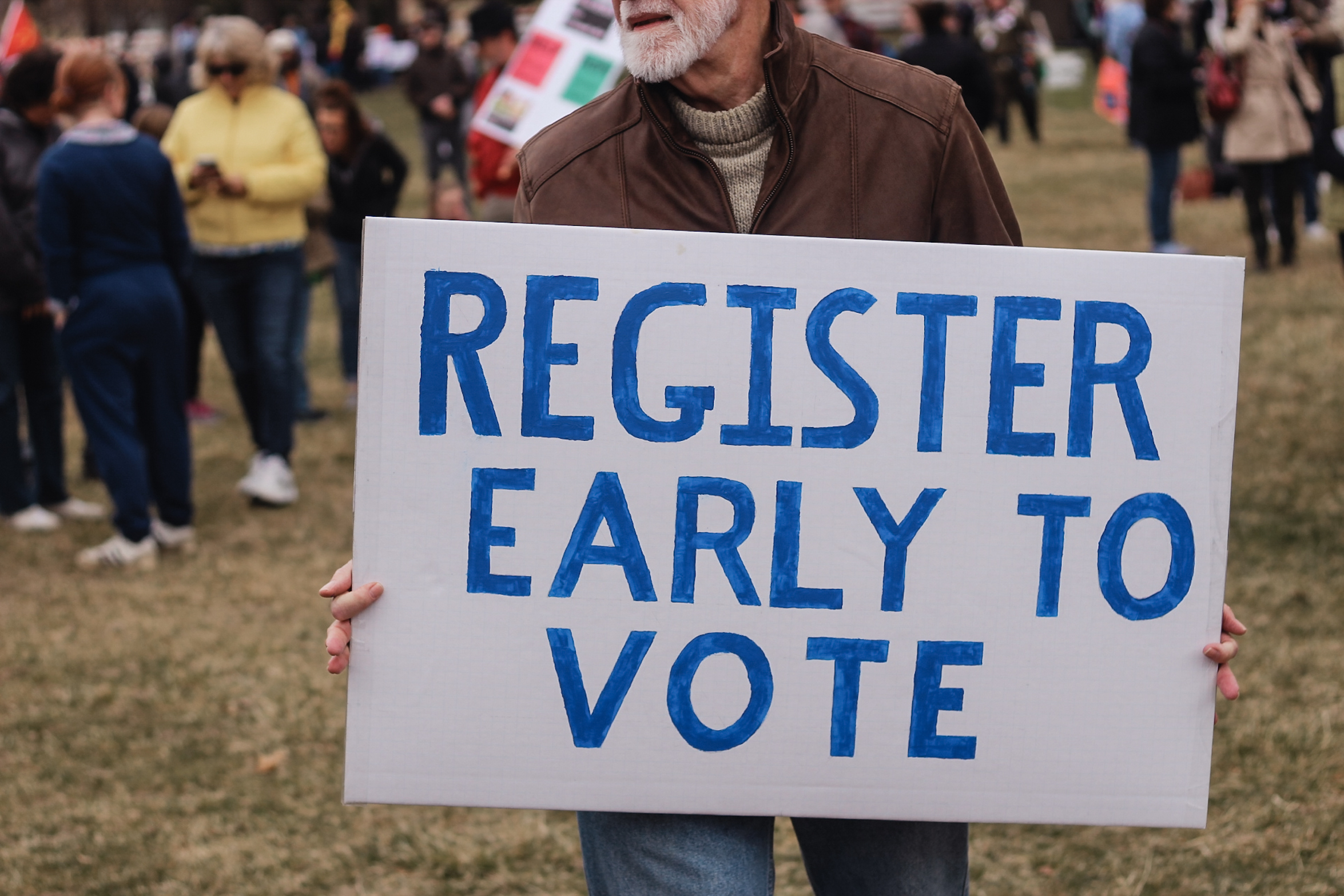
National Voter Registration Day
Eligible Texans who are not already registered to vote may complete and print a voter registration application or request an application from their county elections administrator.
By Menda Eulenfeld, Sept. 24, 2020
National Voter Registration Day may have already passed, but you can still register to vote ahead of the October 5th voter registration deadline for the November 3rd election. Eligible Texans who are not already registered to vote may complete and print a voter registration application here, or request an application from their county elections administrator.
Texas Secretary of State Ruth R. Hughs said “As of this month, there are 16,617,436 registered voters in Texas — a new state record.”
Kenedy County Election Committee
151 Mallory Street
Sarita
Phone: (361) 294-5220
Kleberg County Elections Officer - Stephanie G. Garza
Kleberg County Courthouse
700 E. Kleberg Avenue
Kingsville
Phone: (361) 595-8548
Nueces County Elections Officer - Kara Sands
Nueces County Courthouse
901 Leopard St.
Corpus Christi
Floor: 2nd Room: 201
Phone: (361) 888-0385

Postal Service is a Lifeline For Rural Texans
Business owners, farmers and local politicians said that they are more concerned with long-term problems than with the recent controversy surrounding the United States Postal Service.

For rural Texans, the Postal Service is a lifeline, but some say it's been in decay for years
"For rural Texans, the Postal Service is a lifeline, but some say it's been in decay for years" was first published by The Texas Tribune, a nonprofit, nonpartisan media organization that informs Texans — and engages with them — about public policy, politics, government and statewide issues.
Sign up for The Brief, our daily newsletter that keeps readers up to speed on the most essential Texas news.
The problems with Denice Harlan’s mail didn’t start with COVID-19, the financial challenges of the United States Postal Service or the political tensions before a fiercely contested presidential election.
Yes, a check she was supposed to receive months ago got lost without ever reaching her office in Giddings, about 50 miles east of Austin. But her biggest concern is how delays have become more frequent and customer service has worsened in her rural town during the past several years.
“The postmaster used to be a local guy. You could go down to his house and tell him when something was wrong,” said Harlan, who is the CEO of the local chamber of commerce and works a block away from the post office.
Some of the local postal workers she knew have retired, and she thinks lost and late deliveries have become more common and more difficult to solve.
“I know people that don’t go to our local office because they are so afraid that they might get their mail lost,” she said.
In an election marked by the protracted COVID-19 pandemic when USPS could play a key role delivering mail-in ballots, the agency has experienced nationwide delays. But rural residents in Texas said that they are not as concerned about a potential impact on the election as they are about having regular, reliable service in the long term.
In rural areas where broadband internet connection is scarce, residents rely on the Postal Service to send checks, pay bills, get Social Security benefits and receive prescription medication. This is especially important for people ages 65 and older in the state, a group that represents 16.5% of the rural population and tends to trust physical mail for its needs.
According to data from the company SnailWorks, which tracks millions of commercial letters every day, there have been areas that have experienced delays during the summer, but it hasn’t become a statewide problem.
“We’ve seen overall statistically a half-day slowdown in first-class mail, which is not insignificant, but it is not the end of democracy,” said Dave Lewis, president of SnailWorks. “If you are unhappy with your service, you probably have been unhappy for a while. Things haven’t changed a lot. Places that had bad service probably still have bad service.”
Across rural Texas, business owners, community leaders and farmers told The Texas Tribune that the quality of USPS service varies from post office to post office. Most people haven’t experienced delays during the pandemic, others are happy with their local post offices and some, like Harlan, are worried about long-running decay of service.
/https://static.texastribune.org/media/files/e6b55253e17534e2cd53504aede0e03a/D.%20Harlan%20USPS%20AI%20TT%2014.jpg)
The U.S. Postal Service declined an interview for this story, but a report presented by the agency to Congress late in August showed a minor increase in delays since March that intensified in July. Some of the delays have been linked by workers and Democratic politicians to cost-cutting efforts by Postmaster General Louis DeJoy, who banned overtime and removed some sorting machines.
President Donald Trump has incorrectly linked mail-in ballots with widespread fraud during this year’s presidential campaign. Despite these criticisms, Trump has encouraged voting by mail in Florida. In Texas, Republicans have fought mail-in voting expansions and attempts to increase mail ballot requests in court. According to an analysis by The Washington Post, Texas is one of only five states that still require an excuse beyond fear of COVID-19 for voters to ask for a mail-in ballot.
Trump won Texas by almost 9 points four years ago, but recent polls suggest a tighter race against against Democratic nominee Joe Biden.
In Texas, anyone who is 65 years or older, cites a disability or an illness, is confined in jail but still eligible to vote, or will be out of their county during early voting and on Election Day can request a ballot by mail.
Last month, in San Antonio, U.S. Rep. Joaquin Castro confirmed the removal of machines after a visit to a regional distribution center, and workers later denounced that backlogged mail was hidden during the visit, according to the San Antonio Express-News. Since then, DeJoy has suspended his reforms until after the election and said in a Senate hearing that election mail will be delivered “fully and on time.”
“This will be a trial because it’s the first time the mail has become such a major issue during an election,” said Carlton Williams, president of the Texas Postal Workers Union, which represents 1,500 post office workers, most of them in small towns and rural areas.
His union has been critical of DeJoy’s measures and has endorsed Biden for president, but Williams believes there won’t be issues with mail-in voting.
In Leon County, a rural area north of College Station with a population of 15,000, County Judge Byron Ryder is not especially concerned about voters or election officials not receiving mail-in ballots on time due to the Postal Service delays he has seen for years. Most people in the area vote in person, he said.
“Whatever is happening now happened in the election before and the one before,” Ryder said. “This is not politically motivated. It’s a problem that has happened for the last four administrations. It’s a problem of inefficiency.”
And many other rural towns and counties haven’t seen delays. In Colorado City, west of Abilene, Earl Plagens just retired from being the publisher of the Colorado City Record, which delivers 2,200 newspapers a week.
“Our relationship with our post office is really good. We have no issues with the Postal Service, they are prompt and they do good service,” Plagens said. “Some of our subscribers in other parts of the state sometimes complain about not getting the paper on time. But as far as locally, our post office personnel are doing a great job.”
In Vega, a town west of Amarillo, Oldham County Chamber of Commerce and Agriculture director Jaci Roberson said that this community, and especially its restaurants, have taken a big hit because tourists have stopped visiting during the pandemic. But in the meantime, the Postal Service has remained reliable.
“We depend on our Postal Service, and we get taken care of by them,” Roberson said.
Tommy Engelke, executive vice president of the Texas Agricultural Cooperative Council, said that this is consistent across the state and that none of his members have complained about a decline of service.
“It’s not a coffee shop discussion in small-town America. If it is a problem, it’s not noticeable,” Engelke said.
He said he would have heard if service declined.
“When the post office goes away, in the same sense as when a school is closed, it disrupts lives,” Engelke said. “It’s an economic driver and a social institution. It’s much more than delivering mail.”
Another area where USPS plays a key role is in health care, by delivering prescription medications. According to the Texas Organization of Rural and Community Hospitals, on-time delivery hasn’t been a problem for the patients of more than 150 medical centers that it represents.
“Rural communities are at the end of the line with regards to the mail and most services, and they do rely disproportionately on mail prescriptions, but I haven’t heard any stories of actual delays so far,” said John Henderson, president of the Texas Organization of Rural and Community Hospitals.
While SnailWorks’ data shows a nationwide improvement in service during the last month, Ryder said customers will keep complaining because of the historical inefficiencies of the agency. For him, privatization is the only solution to the problem.
“You can see that people will complain and throw money and think they will solve it, but it won’t. They are the most inefficient office I know of,” Ryder said.
But postal worker leaders refute that private providers would help rural areas. According to them, serving less-populated counties is not always profitable for other providers.
“The Postal Service is grossly understaffed, especially in the rural areas that I represent,” Williams said. “This is a ploy to make the post office a public enemy and say that we are not doing what we are supposed to do. But in those areas back off the woods you are not going to get UPS or FedEx to deliver mail. That is not going to happen in rural America.”
In Giddings, Harlan said that most people, including herself, will vote in person despite the ongoing pandemic because that's how they prefer to cast ballots. But she remains worried that a decline in service and the reputation of USPS will affect an agency that she considers essential for a town like hers.
“We have learned to depend on the post office for a lot. And if they are not reliable, we will lose trust in the post office and we will start using other methods, like UPS or FedEx,” Harlan said. “In our country, we are in a crisis of trust: We can’t trust the government, we can’t trust the media, now we can’t trust the post office. Who we can trust now?”
This article originally appeared in The Texas Tribune at https://www.texastribune.org/2020/09/23/rural-texas-mail-usps/.
The Texas Tribune is proud to celebrate 10 years of exceptional journalism for an exceptional state. Explore the next 10 years with us.

National Night Out at Bishop City Park
The event will be set-up as a “Reverse Parade” where attendees will drive thru the parking lot to see different stations and exhibits.
By Menda Eulenfeld, Sept. 23, 2020
The Bishop Police Department will be hosting their annual National Night Out on Tuesday, October 6, 2020. The event will be held at Bishop City Park from 6 pm - 9 pm.
The event will be set-up as a “Reverse Parade” where attendees will drive thru the parking lot to see different stations and exhibits. Sealed food, goodie bags and other souvenirs will be handed out. Along the route several opportunities will be available to take photos at various stations.
Vehicles are asked to line up on South Birch Street near the entrance to the park.
According to the National Night Out website, the event started in August of 1984 through a network of law enforcement agencies and neighborhood watch groups. “The first annual National Night Out involved 2.5 million neighbors across 400 communities in 23 states.”

Eviction Citations will Have to Inform Renters How to Apply for Protection
The Texas Supreme Court ordered that eviction citations will have to inform renters about the moratorium requirements and include the form needed to apply for protection.
Texas courts must start telling tenants how a federal eviction moratorium can keep them housed
"Texas courts must start telling tenants how a federal eviction moratorium can keep them housed" was first published by The Texas Tribune, a nonprofit, nonpartisan media organization that informs Texans — and engages with them — about public policy, politics, government and statewide issues.
Need to stay updated on coronavirus news in Texas? Our evening roundup will help you stay on top of the day's latest updates. Sign up here.
Texans facing eviction must be informed in court citations about how they can remain housed under a national eviction moratorium, the Texas Supreme Court ordered Thursday. The measure clarified aspects that housing lawyers said were unclear after the Centers for Disease Control and Prevention issued its moratorium on evictions this month.
“Now you will be notified when you are served by the constable that you have this right,” said Fred Fuchs, housing attorney with Texas RioGrande Legal Aid. “For folks that don’t know about this, now they will. It’s absolutely critical that the court took this step. It will ensure to promote public health during this pandemic, because it prevents evictions and keeps people housed.”
Before the court's order, housing advocates expressed concerns that tenants wouldn’t know about the moratorium and its requirements, including that they had give their landlord a signed declaration that the eviction would leave them homeless. It also wasn’t clear if justices of peace could be proactive and educate tenants about the protections.
"Before, you had to print this piece of paper and sign it," said Becky Moseley, staff attorney at Legal Aid Northwest Texas. "This puts the declaration in the tenants' hands, and that's huge. We are very thankful for that."
To be protected by the moratorium, tenants have to declare that they have searched for rental assistance, and they cannot earn more than than $99,000 in annual income in 2020 or $198,000 if filing a joint return, among other requirements. Under the declaration, tenants also agree that they will pay rent eventually, as well as fees and penalties according to their leases or agreements with their landlords. This declaration has to be presented to the landlord and the judge.
Housing advocates and housing lawyers applauded the CDC eviction moratorium, which stops evictions for anyone who signs this declaration until the end of the year, when it was announced, but many pointed out gray areas and loopholes. It was unclear, for example, if cases that started before the publication of the moratorium would be covered and even whether the CDC had authority to issue such an order. On Sept. 9, the Texas Justice Court Training Center provided guidance for justices of peace, but advocates said that tenants still had trouble benefiting from the moratorium.
“I’ve watched 60 cases, maybe more, but I’ve only seen one successful use of the CDC moratorium,” said Zoe Middleton, Southeast Texas co-director with the advocacy group Texas Housers, on Thursday. She was monitoring hearings prior to the publication of the Supreme Court order.
In most cases, tenants weren't present or they didn't know of the declaration.
“The moratorium is not consistently applied, and this makes it difficult to understand for people,” she said.
Housing lawyers also explained that there wasn’t clarity about whether the moratorium should prevent an eviction that has been granted, but the order for the constable to actually evict a person — the writ of possession — hasn’t been issued.
“We saw a case or two in the Valley when the writ of possession had already been issued and they were set to execution by the constable,” Fuchs said. “With this order of the Supreme Court, it makes it very clear that the court must abate these situations.”
The Texas Supreme Court order also allows landlords to contest the declarations of their tenants.
Fuchs warned that although the order is good news for tenants, they will still have to pay rent eventually, many times with added late fees. He is concerned that if there is no action from the federal government on rental assistance, a wave of evictions will start happening once the moratorium lifts in January.
“Now is the time as a tenant to be proactive on getting rental assistance and try to pay as much as possible,” Fuchs said. “And is also the time for Congress to provide rental assistance to the folks that need it.”
This article originally appeared in The Texas Tribune at https://www.texastribune.org/2020/09/18/texas-federal-eviction-moratorium/.
The Texas Tribune is proud to celebrate 10 years of exceptional journalism for an exceptional state. Explore the next 10 years with us.

Texas Needs More Poll Workers
Working at polls is going to look different this year. Find out what poll workers do, who qualifies to be one and how to become one yourself.

Texas needs more poll workers this year because of the pandemic. Here's how to become one.
"Texas needs more poll workers this year because of the pandemic. Here's how to become one." was first published by The Texas Tribune, a nonprofit, nonpartisan media organization that informs Texans — and engages with them — about public policy, politics, government and statewide issues.
Kathy Schneider worked as a Dallas County election clerk in 2018, but out of concern about the coronavirus, she’s choosing not to this year.
“I am 64 and really not interested in exposing myself to coronavirus any more than I need to do,” Schneider said.
Instead, she’s volunteering as a poll watcher for the Democratic party, which she can do outdoors and distanced in a parking lot.
Texas is preparing for a general election for which election officials are expecting unprecedented turnout — and unprecedented demand for election workers. The general election will require local election officials to hire more election clerks because of an extended early voting period, new cleaning and disinfection protocols, and expectations that more people will use curbside voting and mail-in ballots.
Historically, elections have been staffed by older retirees, a demographic that is particularly vulnerable to the coronavirus. A lack of people willing to work because of the pandemic caused some Texas’ counties to close down polling locations during the July primary runoffs. And some officials are concerned that could happen again this fall.
What does an election worker do?
Poll workers do far more than just check IDs and assist with voter equipment. They work long hours setting up polling stations and securing them after closing each night. Bilingual election clerks serve as translators for voters who need assistance. Election clerks also drive materials to and from polling locations; process ballots, equipment and paperwork; and answer questions voters might have.
Counties are also trying to provide more ways for voters to drop off mail-in ballots. For this election, absentee voters can drop off their ballots in person at their county elections offices as soon as they’re completed. And many counties are opening drive-thru ballot drop-offs. For both options, voters should be prepared to show their IDs.
“It takes some of the pressure off the post office and makes voters feel more comfortable that they’re going to have their ballot arrive timely and be tallied,” said Dana DeBeauvoir, the Travis County clerk, whose office has opened three drive-thru options.
DeBeauvoir said Travis County will need about 2,500 election workers this year. In Hidalgo County, officials are hoping for around 800 election workers, nearly doubling the number from past general elections.
Who can serve as an election worker?
“At this point, if you call and say you’re interested in working, we’re hiring you, as long as you meet the requirements,” said Yvonne Ramon, elections administrator in Hidalgo County. “We won’t know [our final needs] until the polls actually open.”
To be an election worker, you need to be 18 years old and registered to vote in the county you wish to work in. The only exception is for teenagers participating in the Student Election Clerk program. Elected officials, candidates, and people related to or employed by a candidate are not allowed to work in an election.
Nicholas Miller won’t be 18 in time to vote in the November election, but since 2019, he’s been working as an election clerk. For him, it’s a way to contribute to the democratic process.
The student program allows high schoolers who are 16 or older to work as election clerks at polling locations throughout early voting or on Election Day.
“I want to [work] this November because I feel like I have a bit of a duty to do it,” Miller said. “I certainly would not want COVID-19, but if I got it versus a poll worker in her 70s got it, it would be a big difference in how it shook out.”
Plus, he says, it’s actually a lot of fun.
Will I be paid to do this work?
Yes. Election workers are paid hourly for the days they work during the election. Counties set their own wages for their election workers, but they have to pay at least the federal minimum wage. However, many counties pay anywhere from $10 to $14 an hour depending on the role.
Election workers should be prepared for long days. At a maximum, you can expect to work a 14-hour shift. However, some counties will accept part-time workers, so make sure to check in with your county about its requirements.
What training do I need?
Training happens at the county level ahead of the start of early voting and Election Day.
How can I apply to be an election worker?
If you are interested in becoming an election worker, check with your county about how to apply. You can use this tool to find your county’s contact and election worker information.
This article originally appeared in The Texas Tribune at https://www.texastribune.org/2020/09/21/texas-poll-worker/.
The Texas Tribune is proud to celebrate 10 years of exceptional journalism for an exceptional state. Explore the next 10 years with us.