
TAMUK Hosts FFA Area X’s First Forage and Cotton CDE Event
Texas A&M University-Kingsville
KINGSVILLE, TEXAS (News Release) - Texas A&M University-Kingsville (TAMUK) hosted South Texas high schools from Future Farmers of America (FFA) Area X during the first Forage and Cotton Career Development Event (CDE) on Friday, April 10.
FFA CDEs are competitions aimed at encouraging members to put their knowledge into practice and prepare for a career through testing and challenging the student's technical, leadership, interpersonal and teamwork skills as well as their knowledge of the subject matter.
While the FFA holds Forage and Cotton CDEs annually, this is the first time South Texas’ Area X has held its own for South Texas Schools as they not only got test their skills but also meet and discuss with industry professionals from the United States Department of Agriculture and Texas A&M Agrilife.
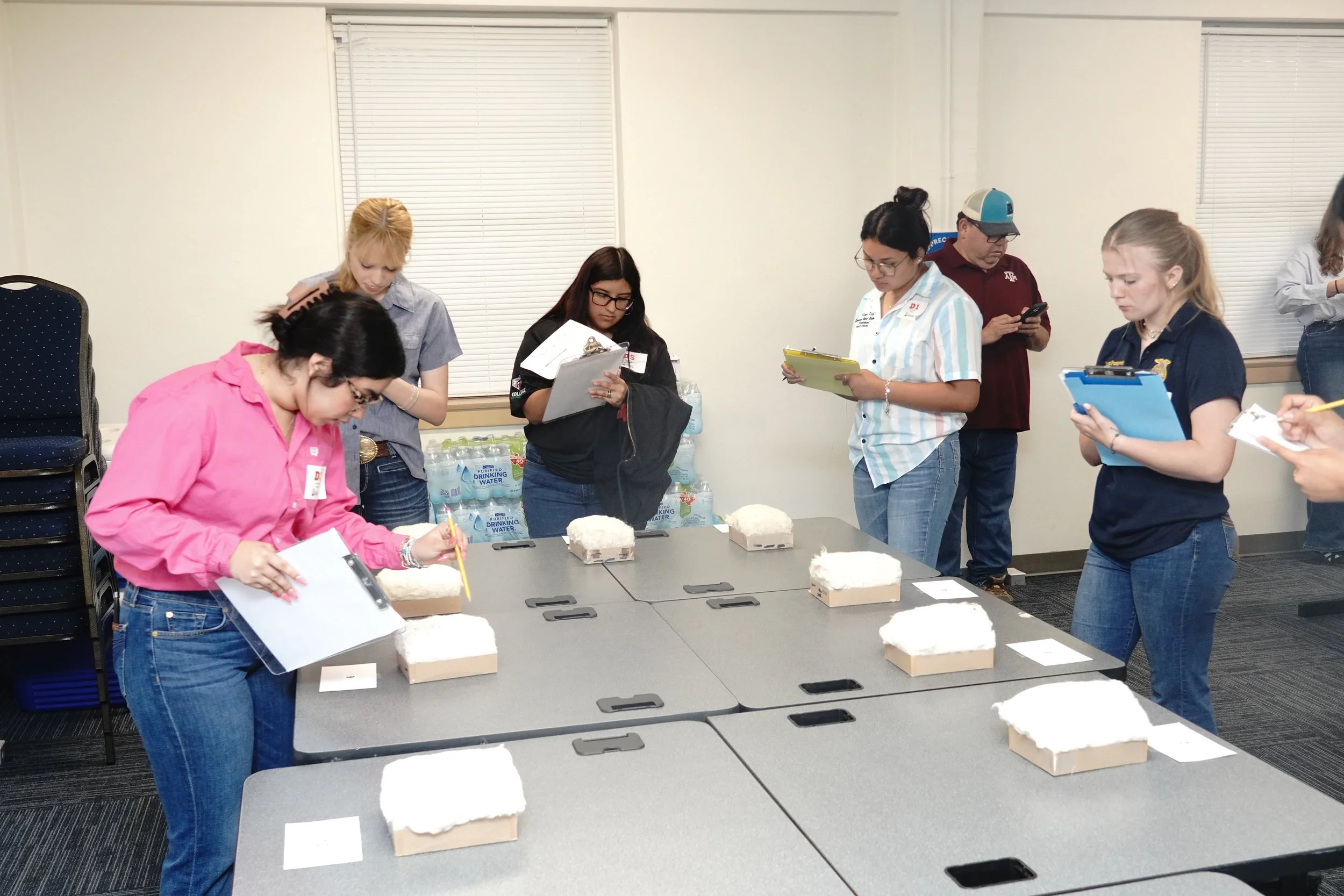
“(The CDE) has been awesome,” said Dr. Greta Schuster, professor of Integrated Pest Management and Plant Pathology at TAMUK. “My excitement stems from getting the students on campus to see the university and to realize that there are career options. They’re seeing professionals here today and realizing that there are career possibilities out there. It’s been exciting to be able to show these kids what they can do in the future, whether it be animal nutritionist or forage specialist.”
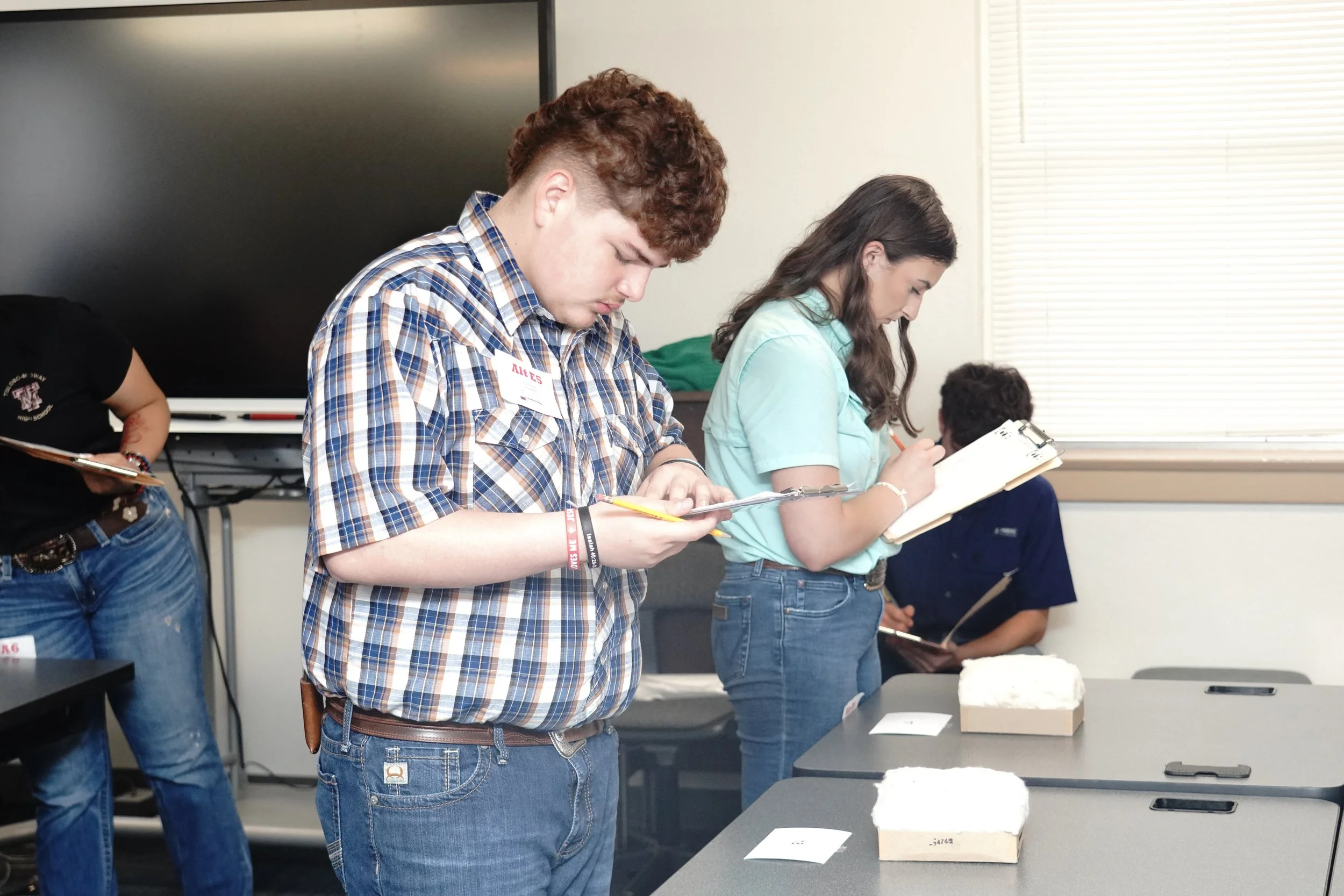
The CDE featured Cotton Classing where students identify USDA cotton grades based on industry standards by classing 50 cotton (biscuit) samples into cotton and leaf grades.
The exercise shows that while industry employs technology to grade cotton, students can use their senses to apply cotton-grading standards and can understand how grades are derived, one of many skills that Jose “Pepe” Martinez, Grazing Specialist for the USDA National Resources Conservation Service (NRCS) and 2006 TAMUK grad, says is crucial for CDE contestants to learn about if they are aspiring ranchers.
“It’s important for the youth to take this discipline serious because we are seeing a huge gap in the future land manager in our country,” Martinez said. “The average rancher and landowner in The State of Texas is 60 years old. Having the youth excited and passionate about this discipline is important for the nation. TAMUK is helping with that by getting entities together to promote the importance of good conservation. Students excited about plants and animals puts us all in the same boat on this.”
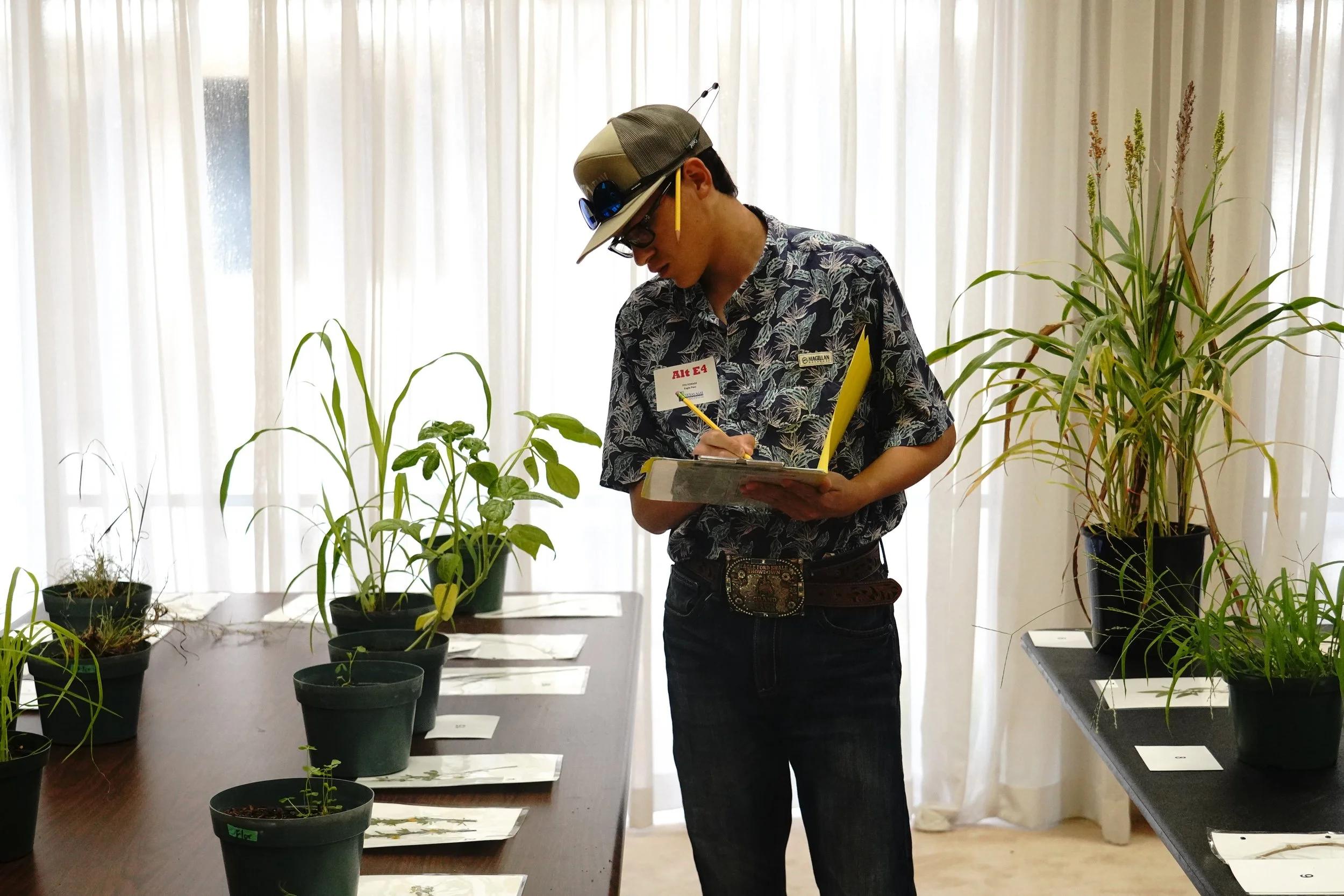
For the forage contest, students were presented with various forage species to evaluate hay based on physical properties, identify species common to pastures. This included Hay Judging, Plant ID, an exam testing team members’ knowledge of different aspects of forage production and evaluation, and a problem-solving portion.
On-hand for the forage contest was Jamie Foster, Texas A&M Agrilife professor of forage agronomy, who wanted students to understand the importance of agriculture in everyday life.
“Agriculture is very important to feed and clothe all of us,” Foster said. “These students have desire to learn about it so they can have a career in agriculture to help keep food and fiber production going. The forage component is the basis of our grassland ecosystems. Forages and grasses encompass about 40 percent of all our terrestrial landings, so it’s important for ecosystems, raising livestock, housing and wildlife. So, learning to identify and manage forage is an important skill to learn for that purpose.”


Buy us a digital coffee! This is a fun way to sponsor STCN by helping us fuel local Journalism.